
Back in May, I was invited to have a Replenish stall at Cholsey’s Green Fair. My stall was next to the Cholsey Food and Growing Group, one of the Cholsey Environment Champions. I was fascinated by the array of jars full of colourful liquids on their stall – they turned out to be vinegars made from, or flavoured with, fruit scraps.
Andrea Andrews has kindly shared with me how she makes these wonderfully scented vinegars that can be used in cooking, salad dressings or even for cleaning. They really do smell so good!
This YouTube video by Rain Country shows you how to make fruit vinegars
Image by Pantagruelo from Pixabay
How does it work?
Vinegar is made by a fermentation process. First the yeast, naturally present on the fruit scraps, consumes the sugar in the fruit and produces alcohol. This is called alcoholic fermentation.
After this, acetic acid bacteria process the alcohol and turn it into acetic acid. Once all the alcohol has been turned to acetic acid, you have vinegar.
What fruit can I use?
You can use pretty much any fruits, but apples, pears, strawberries, grapes and pineapple are particularly good. Citrus fruits, like lemons and oranges also works well.
Although you can use whole fruits, it saves money and reduces waste to us the parts you might not normally eat like apple peels and cores, citrus or banana peel and strawberry tops (including the green part). Bruised or overripe fruit, like brown bananas are also OK, but avoid any that have mould growing on them.
You can mix scraps together if you don’t have enough of one type, or you can freeze them until you do. Dried fruit also works, but you won’t need so much and as they are already preserved you might not want to use them for vinegar.
Images by ❤ Monika 💚 💚 Schröder ❤ (top) and Myriams-Fotos (bottom) from Pixabay

The method
- Leave a container of tap water to stand for around 12 hours so that the chlorine dissipates.
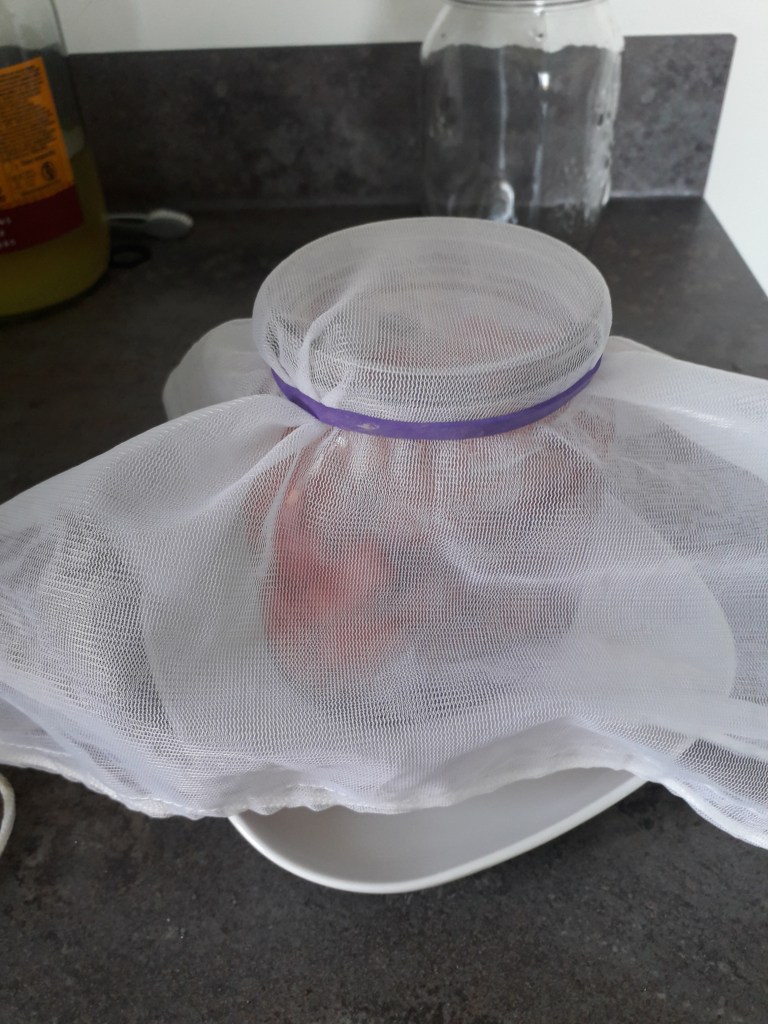
- Place the fruit scraps into the non-chlorinated water, so that the container is 1/2 to 3/4 full. Cover the container to stop dust or fruit flies entering, but allow air in. You can use a muslin cloth, tea towel or paper towel as a cover and secure it with an elastic band. Keep at room temperature away from direct sunlight.
- Stir the mixture every day, making sure that the fruit stays wet. You can weigh down the fruit if you want to, but don’t use anything metal. Watch for signs of fermentation – it will start to bubble and smell like alcohol. If you see no sign of fermentation after a few days add some sugar or honey (approx. 1 tbsp per 250 ml water) to get the mixture going.
- After around 30 days the fermentation process will stop (stop bubbling completely) and your vinegar will be ready (you can leave for another week to make sure). Sometimes it will take less time, sometimes more, so be patient.
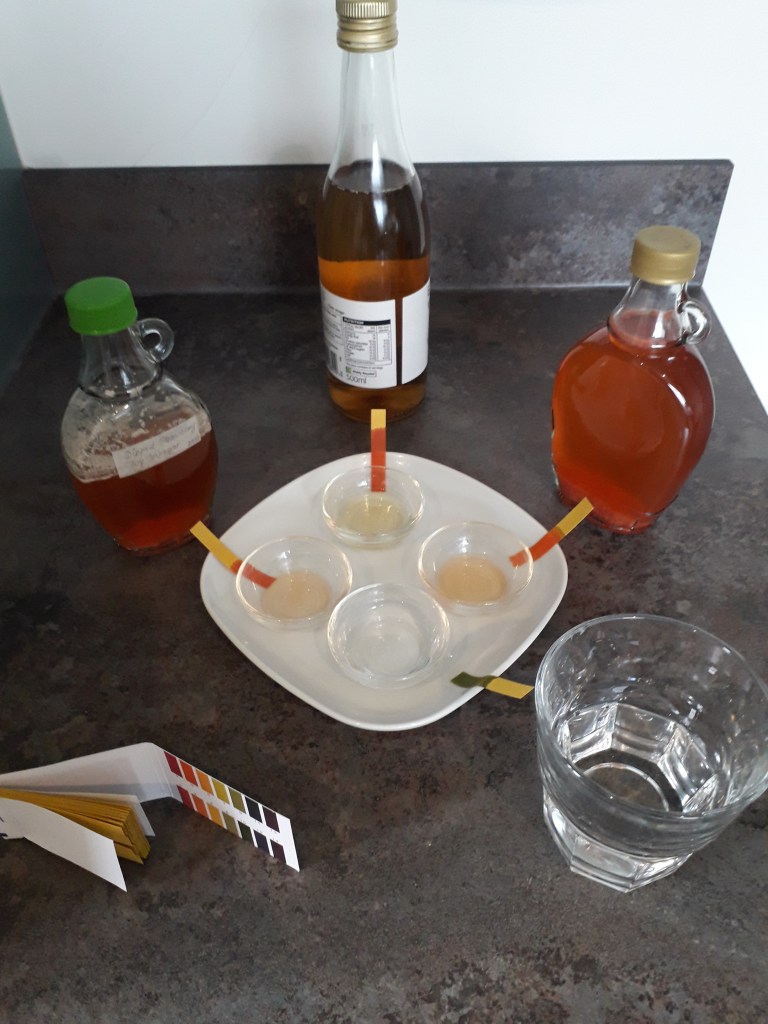
- Filter out the fruit (you can add this to your compost heap) and test the acidity of the liquid with paper testing strips. The pH should be between 3.5 and 4.5.
- Transfer to a glass sterilised jar, ideally with a narrow neck and a non-metal lid and store in a dark cupboard. The vinegar will mature with age and develop a stronger flavour.
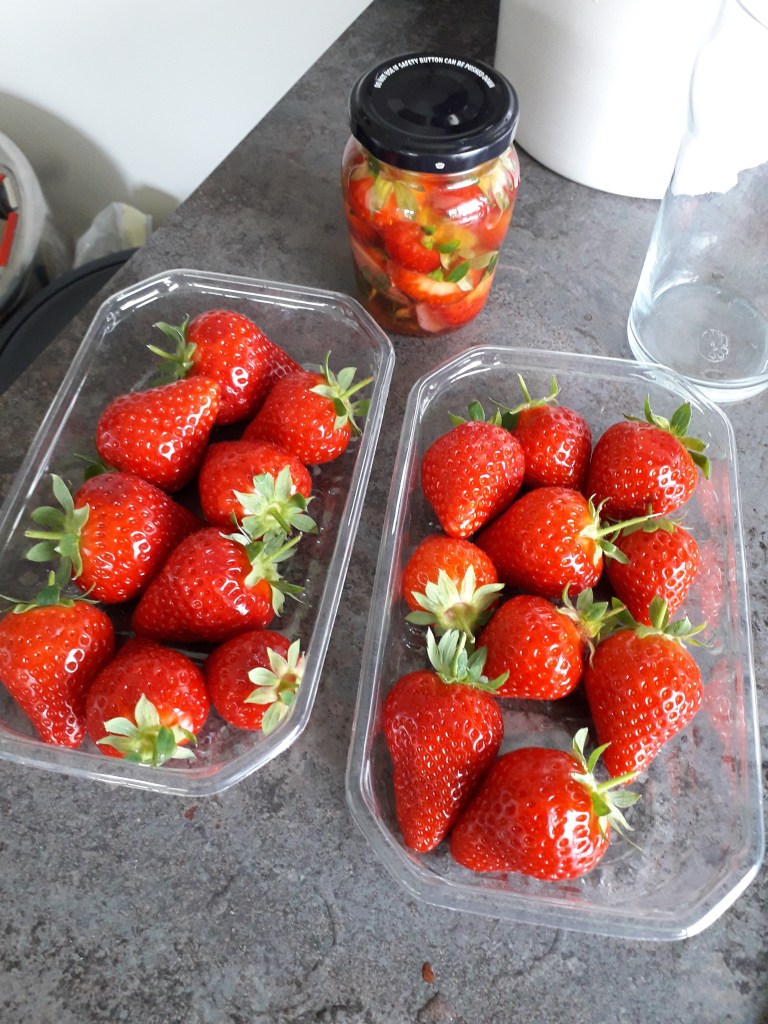
Strawberry vinegar
Now strawberry season is upon us, Andrea recommends trying strawberry vinegar.
You can make this by adding strawberry tops to an exisiting vinegar to infuse until the colour changes and it smells of strawberries. Andrea used her homemade apple cider vinegar, pictured left with added strawberry tops.
Image by Andrea Andrews
Or you can add strawberries to water for around 35 days for them to ferment and turn into vinegar. As you can see, both have a lovely colour and the pH is close to that of shop bought vinegar, as shown by the pH test strips.
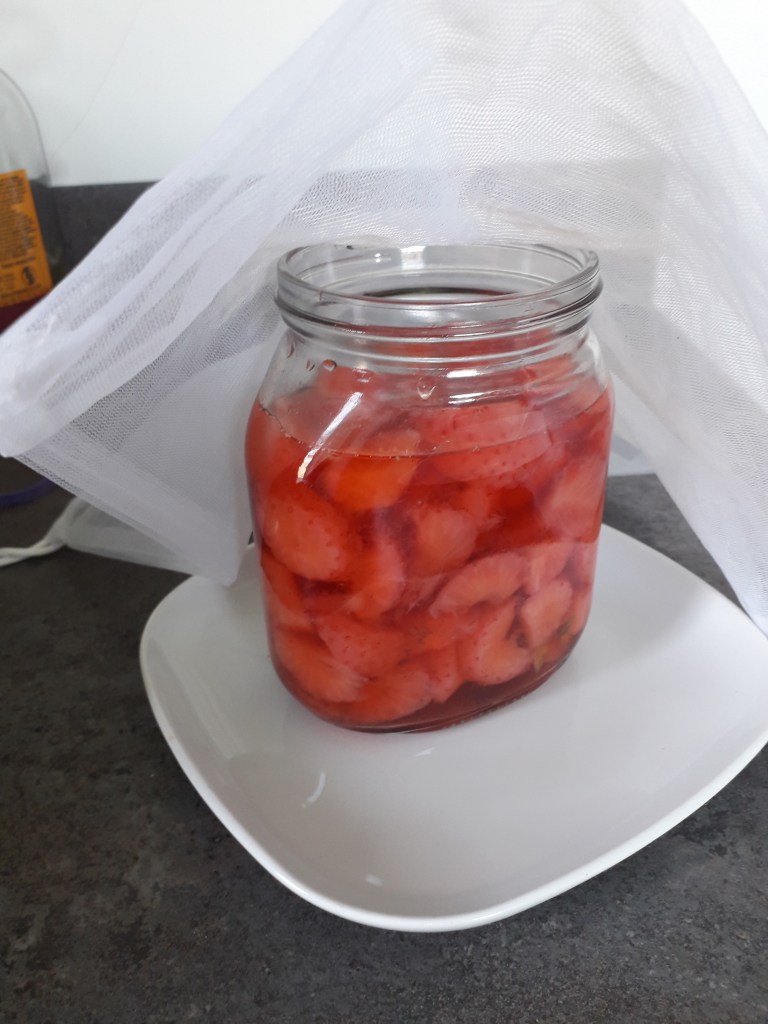
I’ve read that you can also add herbs to your vinegars – basil or mint work well with strawberry vinegar and apparently banana peel and mint tastes and smells like lemon juice.
What can I use my vinegar for?
You can you use your fruit vinegar as a substitute for vinegar or apple cider vinegar in most recipes. It can also be used in place of lemon juice. You can also turn it into a drink by adding a shot of fruit vinegar to still or sparkling water. Your vinegar probably won’t be acidic enough to use it for pickling – the pH would need to be about 2.4 for this purpose.
Citrus vinegars are great for household cleaning and some people even use fruit vinegar (1 part to 5 parts water) as a hair rinse. Check out this YouTube video from Rain Country for more ideas on how to use vinegars.
Want more tips on avoiding food waste
and growing you own food?
Follow us on social media or sign up to our newsletter.
 Replenish