
This summer, why not experience a taste of the Mediterranean by growing some sun loving fragrant herbs. Herbs de Provence is a herb blend from the South of France. The mix is made up of herbs that you find growing on sunny hillsides in Provence. Traditionally, thyme, oregano, savory and rosemary are combined. You could also try adding marjoram, basil or tarragon.
All of these herbs like the same growing conditions – full sun and good drainage. Add grit to the soil or container to stop them getting waterlogged in winter. They are also happiest in fairly poor soil, so no need to waste compost on them. Don’t plant them too close together, so they don’t shade each other as they grow.
Thyme
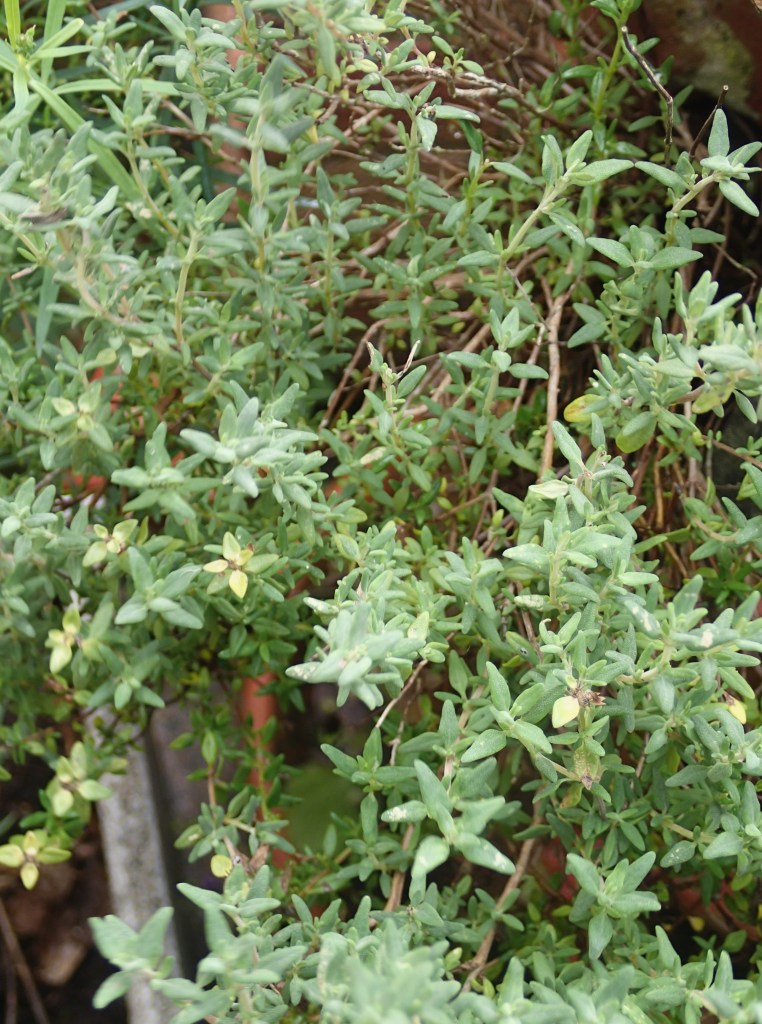
Thyme is an evergreen shrub, so the leaves can be picked all year round. The flavour will be stronger in late spring and summer. It is low-growing and so makes a great ground cover at the front of a sunny border.
There are many varieties of thyme with varying leaf colours; green, yellow and variegated with silver or gold. There are also distinct flavours with citrusy lemon, lime and orange varieties, or caraway thyme with a slightly anise or licorice flavour, like caraway seeds.
Oregano
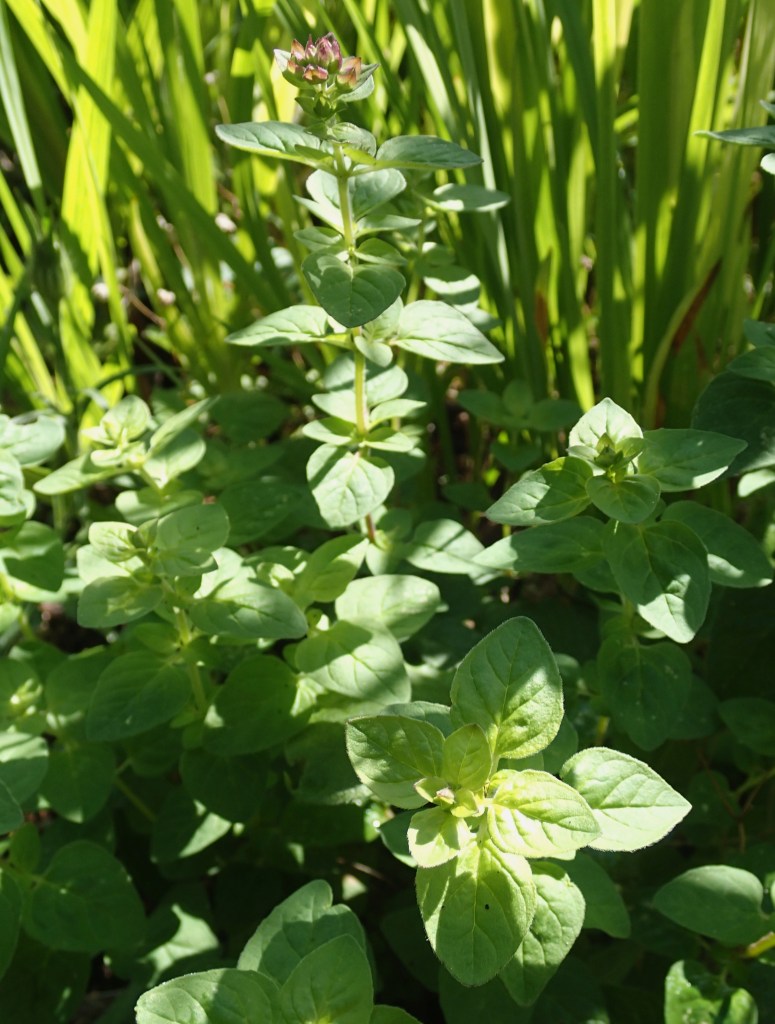
Oregano is the name given to Origanum vulgare, whereas other varieties of Origanum tend to be called marjoram. Marjoram is sweeter and less strong than oregano and I’m fairly sure that is what I am growing. It seems to self-seed everywhere, including in the lawn, which smells lovely when we mow it. Oregano is a perennial plant, so it will die back in winter, but come back every spring.
Rosemary
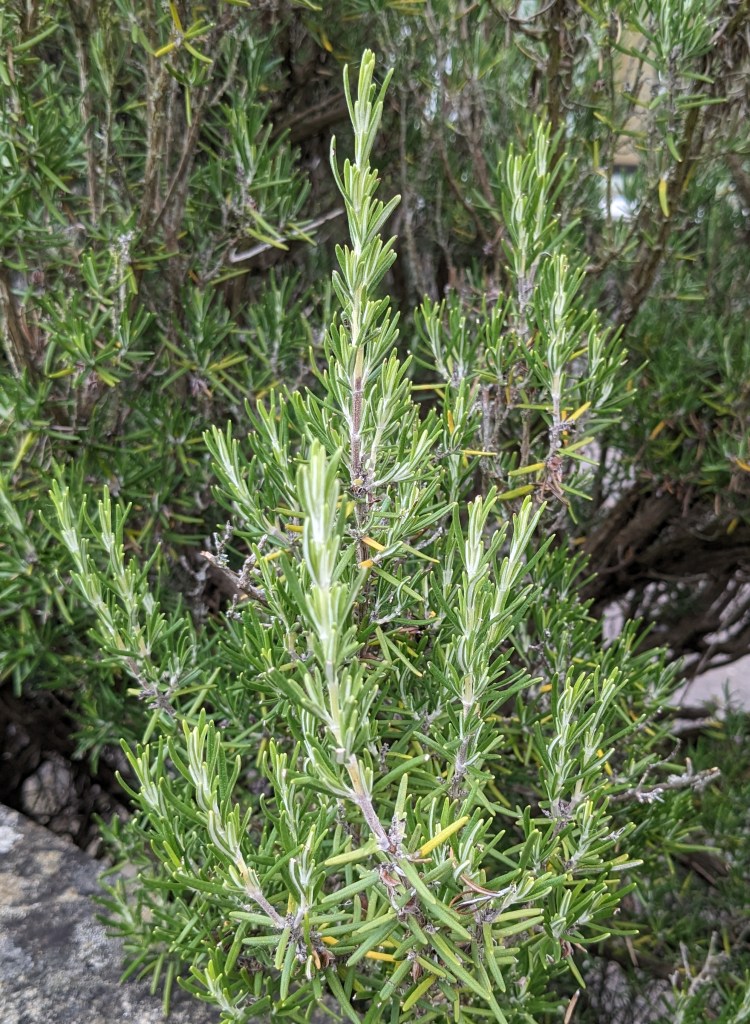
Rosemary is an evergreen shrub with a powerful aroma. It is actually a type of sage, with its latin name being Salvia rosmarinus. Both the narrow leaves and the attractive, usually blue, flowers can be used in cooking. Pick regularly and prune after flowering to retain a compact bush about 60-90 cm high and prevent it getting straggly. You can also get a prostrate, creeping variety that is great for trailing over the sides of pots.
Savory
Savory is a less common herb in the mint family, with a choice of two types – summer and winter. Winter savory is an evergreen perennial and so can be picked year round. Summer savory is said to have a better flavour, but is an annual, so you will need to sow it every spring; if you are lucky it might start to self seed. Both have a spicy peppery taste and are often used in bean, lentil and egg dishes.
Use in the kitchen
Herbs de Provence is a multi-purpose mix, but is often used with poultry or lamb, as well as fish. Dishes based on Mediterranean vegetables like ratatouille or a veggie lasagne with peppers, aubergine and courgettes work well with Herbs de Provence. Add them to tomato-based soups or stews or scatter them on roast potatoes, as an alternative to rosemary. You could also use them in recipes as a substitute for oregano.
Image by Petya Stoycheva from Pixabay

Making your own mix
Pick stems either in the early morning or evening. Avoid the heat of the day when they are likely to wilt. Don’t pick them when they are flowering as this can make the leaves taste bitter.
Give them a wash to remove any bugs and shake off as much water as possible or pat dry with a clean tea towel.
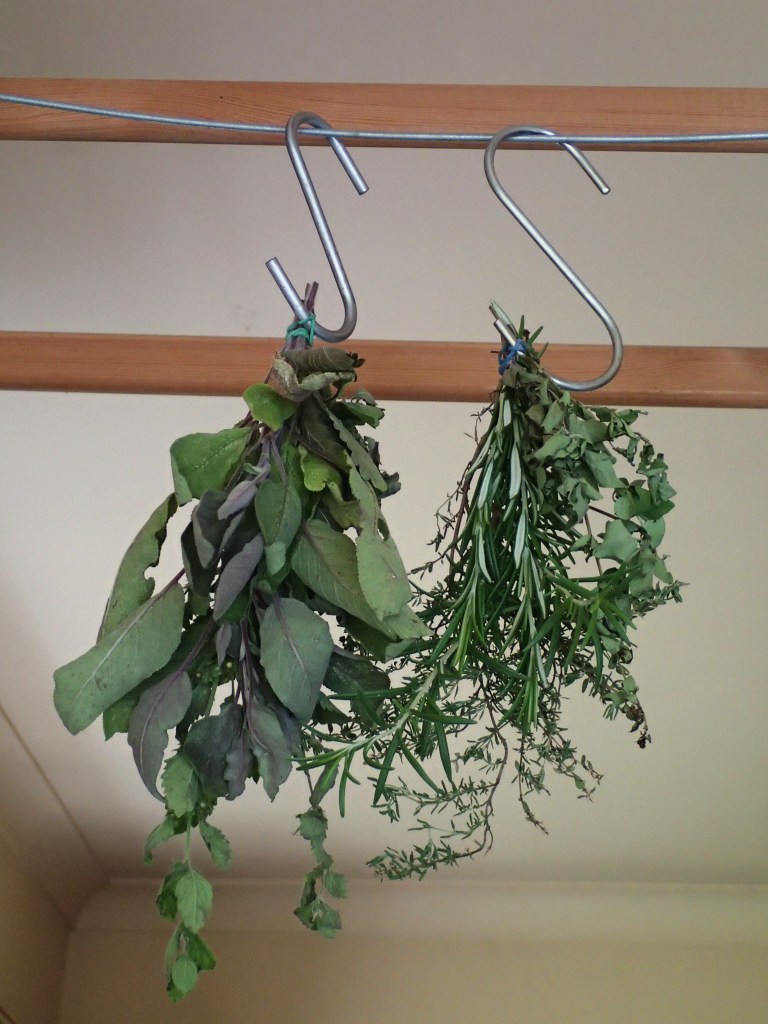
Tie small bundles of the herbs together and air dry them by hanging the branches upside down in a dry, warm location. The kitchen generally works well, but not near the hob to avoid the steam.
Alternatively, you can lay them flat on a baking sheet to dry out.
The herbs will be dry in one to two weeks and should feel brittle to touch. Run your fingers down the stems to remove the leaves. Pick out any bits of stem.
Mix even amounts of each herb together in a bowl, or vary the quantities according to your taste. Store in the dark in a glass jar.
The flavour will be stronger if you don’t crush them at this stage. When you are ready to use the herbs, grind them up in a food processor, with a pestle and mortar or push them through a sieve.
You could also grind them together with some sea salt to make a herb salt.

Making more plants
Thyme, rosemary, oregano and winter savory can all be propagated by taking cuttings. This is useful to replace plants that have got woody or leggy or to give some away to friends and family.
Take around a 10 cm non-flowering cutting and trim off the lower leaves. Cut the stem just below a leaf node – the point the leaves were growing from. I find ‘semi ripe’ cuttings more reliable – these have woodier stems, from last years growth at the bottom and can be taken in late summer or early autumn. Or you can take ‘soft wood’ cuttings of new growth in spring.

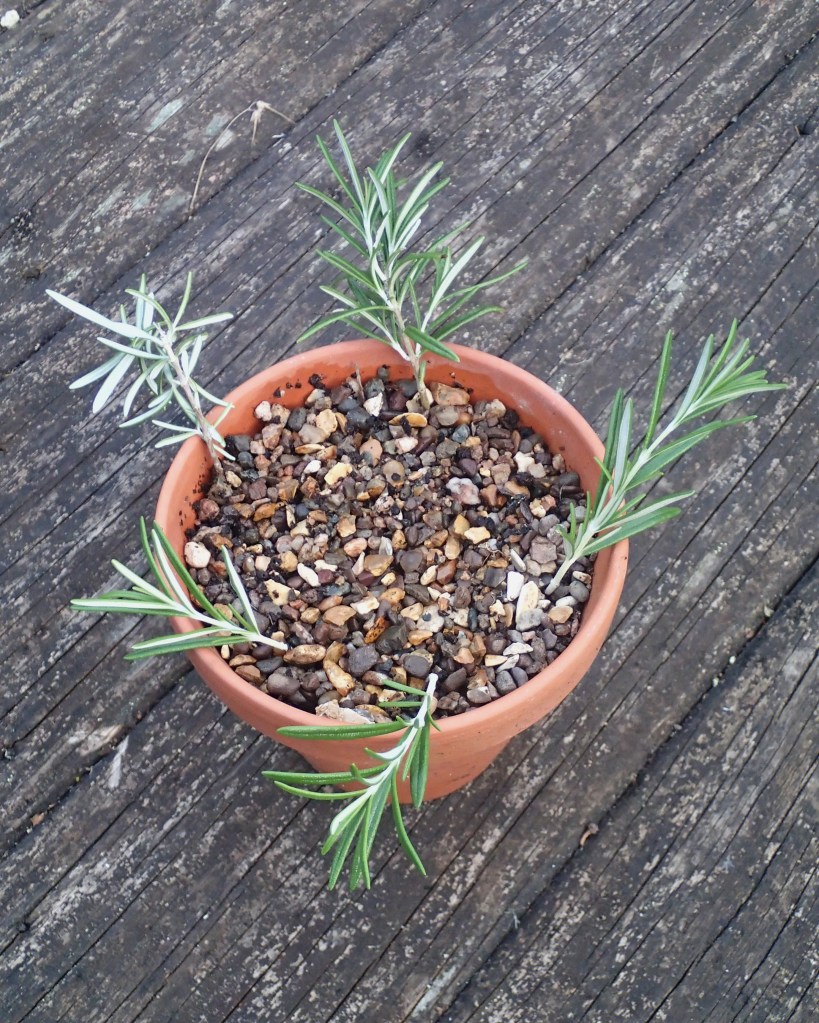
Insert the cuttings around the edge of a terracotta pot filled with gritty compost. I find a layer of grit on the top stops the stems rotting and massively improves my success rate. You can use rooting hormone powder, but I don’t find it necessary.
Water well and place in the shade. In a few weeks check if roots have formed and if so, transfer cuttings to individual pots.
For oregano, I would prepare cuttings in the same way, but place them in water to root instead of soil. The same method works well for mint and lemon balm. Or you can divide large clumps of these herbs in spring or autumn.
A friend of the bees
As well as being wonderfully fragrant and useful in the kitchen, these herbs are all attractive to bees and other pollinators.
Bees are decreasing in numbers in the UK and worldwide. A 2019 World Wide Fund for Nature report¹ for the east of England found that 17 species of bee were no longer present in the region and a further 25 species were at risk.
They are also very drought tolerant, so definitely worth making some space for them in the garden. I wouldn’t be without mine and plan to expand my herb garden in autumn to include lovage, tarragon and hyssop.

Sources
Want more tips? Check out our other grow-your-own guides or follow us on social media!
 Replenish