How you and your favourite restaurants can promote climate-friendly food choices
Post by Hailey Larson, Cherwell Collective on behalf of Replenish
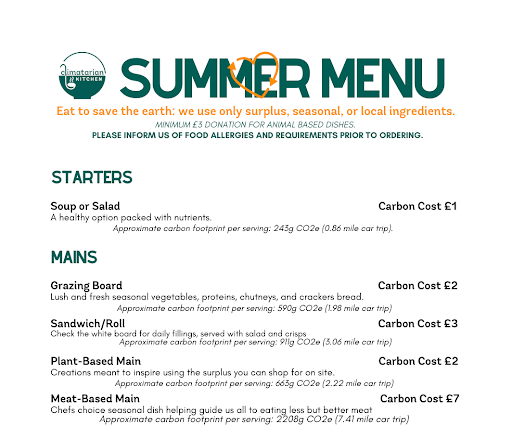
If you’ve ever visited Climatarian Kitchen in Kidlington, you may have noticed something out-of-the-ordinary on the menu, a carbon cost!
At its base, carbon costing means understanding the carbon footprint of your food in terms of its greenhouse gas emissions. It’s actually quite easy to do, especially with the help of our Carbon Cost tool.
Carbon costing and getting familiar with which foods are higher- or lower-emitting is a great way to improve your carbon literacy and make a difference. Food production is estimated to contribute a quarter of all greenhouse gas emissions worldwide.
You’ve likely heard that reducing your meat intake can drastically affect your carbon footprint. But do you know why?
Where do our food’s emissions come from?
You might be surprised to learn that the true carbon footprint of your food has a lot less to do with the amount of distance your food travels (this contributes to less than 1% in most cases!), and a lot more with the way in which your food is produced.
For example, take a look at the chart below¹:
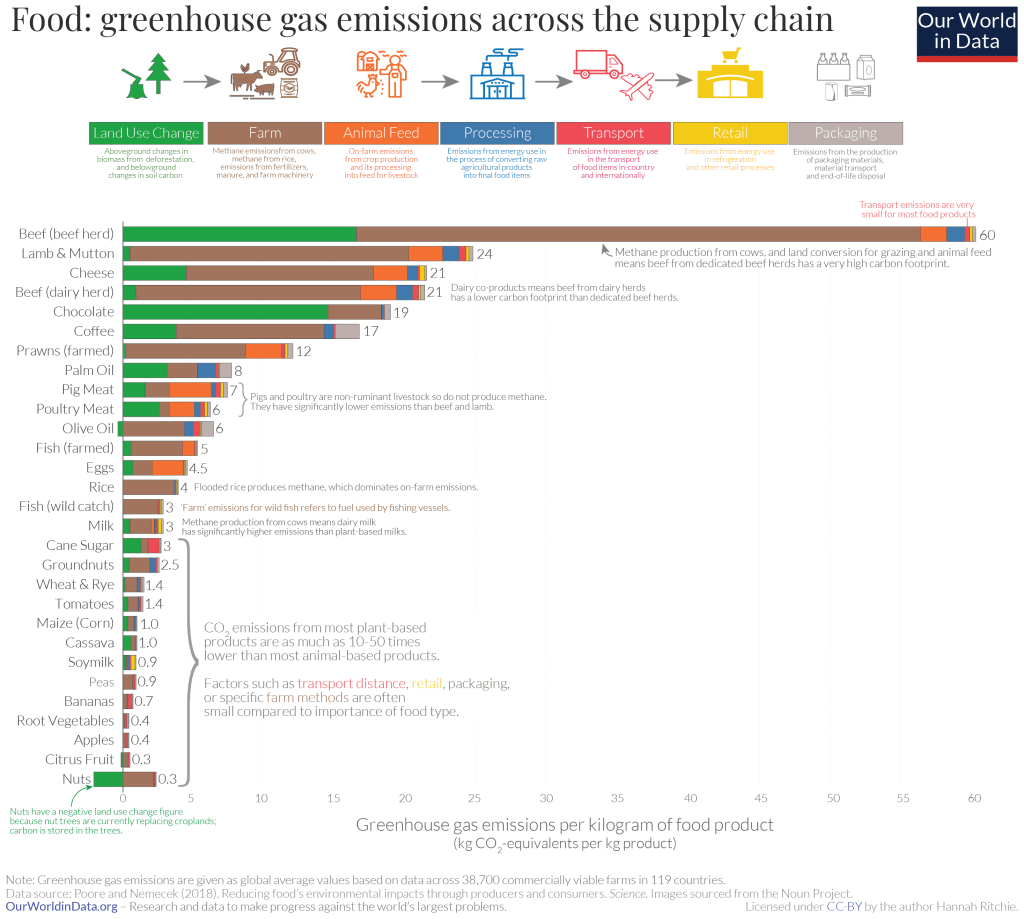
The most important factor is food type. Note that cheese, chocolate, and coffee (foods which, we might add, are regularly consumed over their portion size!) are worse for the environment than many meats like pork, chicken, and fish.
Although eating locally produced food is great to support a local economy, it is not the best way to reduce the emissions of your diet.
Understanding the Carbon Cost of your decisions, and weighing those costs, is one way we think people can feel more agency and understand the impact their decisions have.
Carbon Cost of Food: Application for Restaurants
People who visit our cafe comment on how the carbon cost makes them think about what they eat and what they buy.
Climatarian Kitchen adjusts all menu prices to correspond directly to the emissions of the dish. We convert the emissions into a car mile equivalent and suggest people donate £1 per car mile (that’s the Carbon Cost!)
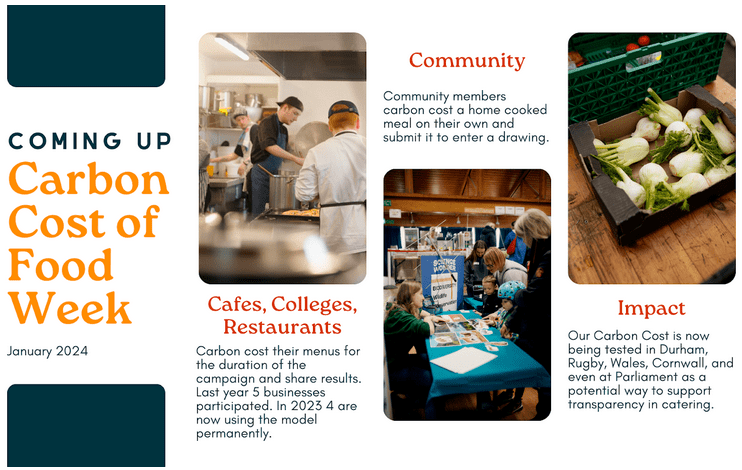
Carbon Cost of Food Week
In January 2023 we hosted a campaign and asked other food organisations to join us in using this tool. It was a major success, with people as far away as Wales claiming it makes them wonder if their food is worth driving that far!
We’re repeating that event at the end of January 2024. You can help get involved by carbon costing your own food using this tool, or by recommending your favourite restaurant work with us to increase transparency in dietary choice.
Our Climatarian Food Guides and Tools can all be found here
Sources
Additional Resources
- Climate Change Food Calculator
- Poore, J., & Nemecek, T. (2018). Reducing food’s environmental impacts through producers and consumers. Science, 360(6392), 987–992.
Want more tips on healthy, sustainable food
and growing your own?
Follow us on social media or sign up to our newsletter.
 Replenish