Back to basics
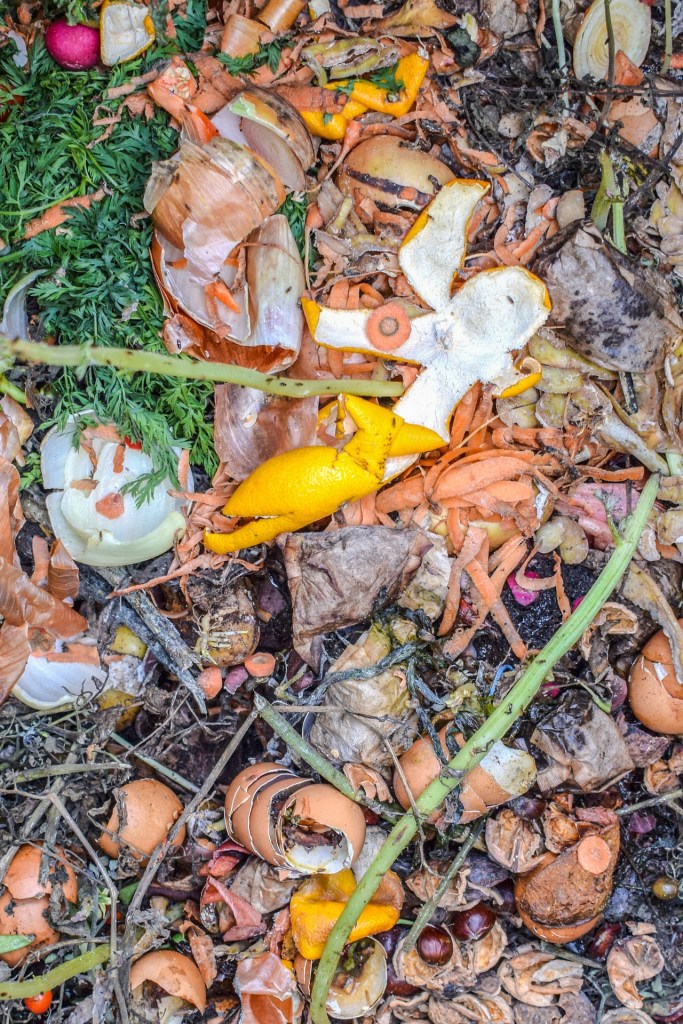
There are many different types of composting systems available – from hot composters to worm bins. Before we take a look at the options, let’s go back to basics. All you need to make nutrient-rich compost is:
- High carbon material (browns)
- High nitrogen material (greens)
- Water
- Oxygen
You don’t even need a container and can successfully create compost by piling up organic material above ground in a heap or by digging a compost pit or trench and buring it.
Image by Ben Kerckx from Pixabay
I have grown some fantastic runner beans with trench composting. Dig two trenches in autumn where you plan to plant beans and gradually fill them with shedded newspaper and vegetable scraps. Throw some soil on top each time to weigh it down and detract animals. By the time you come to plant out your beans in May or June the trenches will contain plenty of material. Top them up with soil or home-made compost and plant the beans into them. The organic matter will continue to breakdown and feed your plants as they grow. And best of all you didn’t need any extra space or have the hard work of turning piles.
Choosing a composting system
If you don’t like the look of a compost pile or if you have problems with rodents, then you might want to invest in a system. First consider what type of waste you are planning to compost – food and garden waste or just food waste? Other considerations are how long you are prepared to wait for your compost, the amount of material you are composting, how much space you have and your budget. There is definitely a composter out there for everyone though!
Food and garden waste
If composting food and garden waste, decide whether you want to do hot or cold composting. There are two main benefits of hot composting, Firstly, it’s faster – producing a finished product in 1-3 months, compared to 6-12 months for most cold composting systems. Secondly, the heat kills pathogens allowing you to compost cooked food, meat, fish and dairy, as well as weed seeds and diseased plants. However, hot composters are more expensive than other systems, starting at around £100.
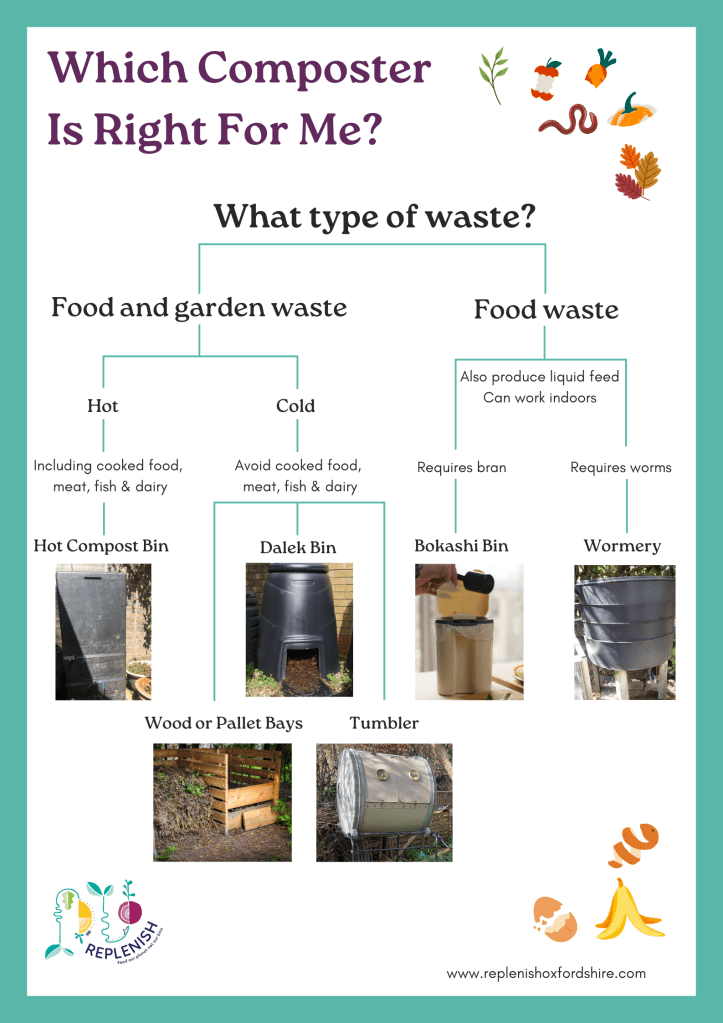
If you prefer to cold compost, the cheapest option to contain your material is to make a bay system with recycled wood or old pallets – you can usually get these free. Avoid pallets stamped with MB, as they have been treated with the fungicide methyl bromide.
Go for at least two bays so that you can let one side breakdown while you are filling the other – three is even better if you have space. Joe Gardener TV has a great video on how to make a DIY pallet bin. My top tip is to have removable middle panels or slats, making it easier to turn compost from one bay to the next. Pallet bays are perfect if you have a large amount of garden waste to compost.
Another inexpensive option is a dalek bin costing from around £30. These are made of hard, usually recycled, plastic and will help to retain heat in your compost pile. They have a hatch at the bottom for easy access to the finished product. It can be hard to turn the compost and some people find them difficult to empty.
Tumblers are a good option if you have smaller amounts of material or want to produce compost faster. They are also raised above the ground and so you are less likely to be troubled by rodents. It’s worth getting one with two chambers for a more continuous supply of compost. The cost starts from around £50, depending on capacity.
Food waste
If you only have food waste to compost then you could try a bokashi bin. The food scraps are anaerobically fermented, rather than composted. As well as the initial container, you need to buy a bran containing micro-organisms, so it isn’t the cheapest option. They are small and don’t smell, so work well if you want an indoor system.
Wormeries make use of composting worms to turn organic material into a solid fertiliser, otherwise known as worm poo. There is a lot of choice out there, so take a look at Gardeners’ World list of the nine best from 2023. Some wormeries can also be used indoors, or have a go at making your own mini worm farm.
Both bokashi bins and wormeries also produce a liquid that you can dilute with water to feed your plants. You’ll never need to buy plant food again!
Suppliers and more
Getcomposting.com work with UK councils to supply a range of compost bins and wormeries. Wigglywigglers supply composting worms and many other composting systems.
Check out our composting at home guide for more tips on making your own ‘black gold’.
Want more tips on avoiding food waste
and growing you own food?
Follow us on social media or sign up to our newsletter.
 Replenish