Trench composting is an easy way to incorporate organic matter into the soil and it means you don’t have the trouble of having to turn your compost pile. This is a great solution if you don’t have the space for a compost system – it only requires a spade and otherwise is completely free.
Winter is the perfect time to give it a go and by springtime the waste will have rotted down and added nutrients to your soil.
It is typically used where you plan to grow beans, which is why a long trench is suggested. However, the method is also ideal for courgettes and squash that require lots of water and nutrients. In that case you can use the same method over a wider area, digging trenches or holes across the whole of the bed.
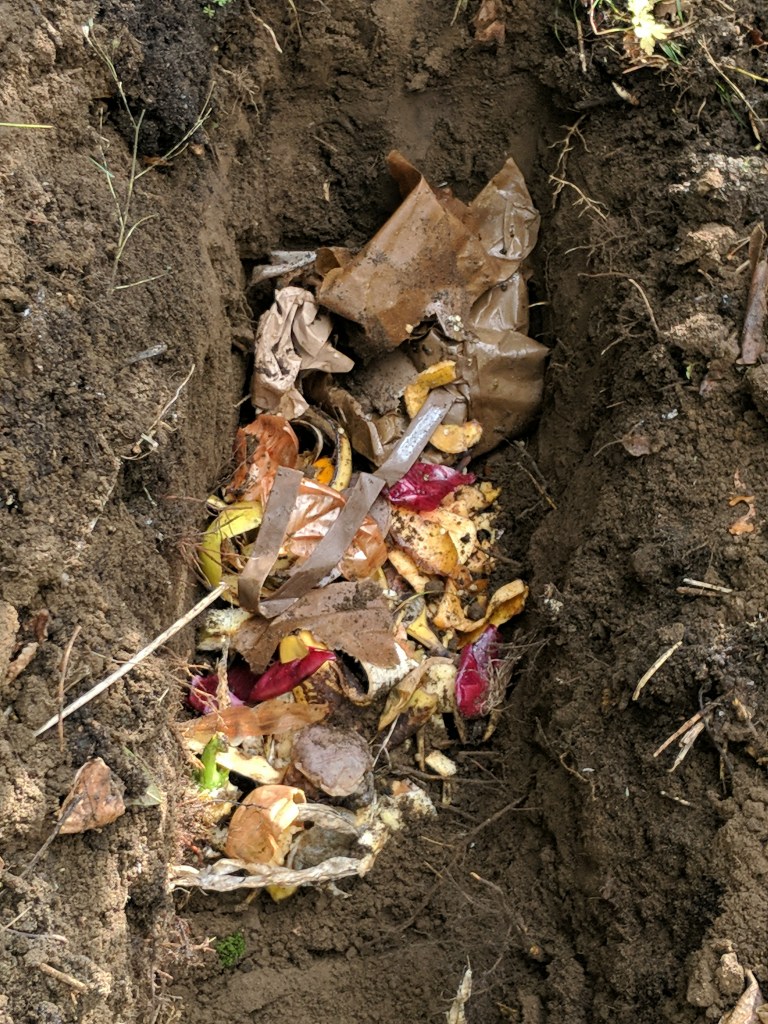
As soon as the ground is clear in autumn or winter, start by digging your trench 20-40 cm deep where you want to plant beans next spring.
Collect your raw household food waste – fruit and veg peels, tea bags, coffee grounds, egg shells – and add these to the trench. It’s helpful to mix in some soil so that the microorganisms present can get to work breaking down the material. Chopping it up with your spade will also speed up the composting process.
To avoid smells and fruit flies in the kitchen try freezing your food scraps. Once you have a full bag, add it to your trench. It’s as simple as that!
You can add autumn leaves or torn up newspaper, toilet roll inners and egg boxes on top of the kitchen scraps. This will help to disguise smells and prevent unwanted critters from digging up your waste. It’s best to avoid adding raw meat or bones, dairy or cooked food as this may also attract visitors.
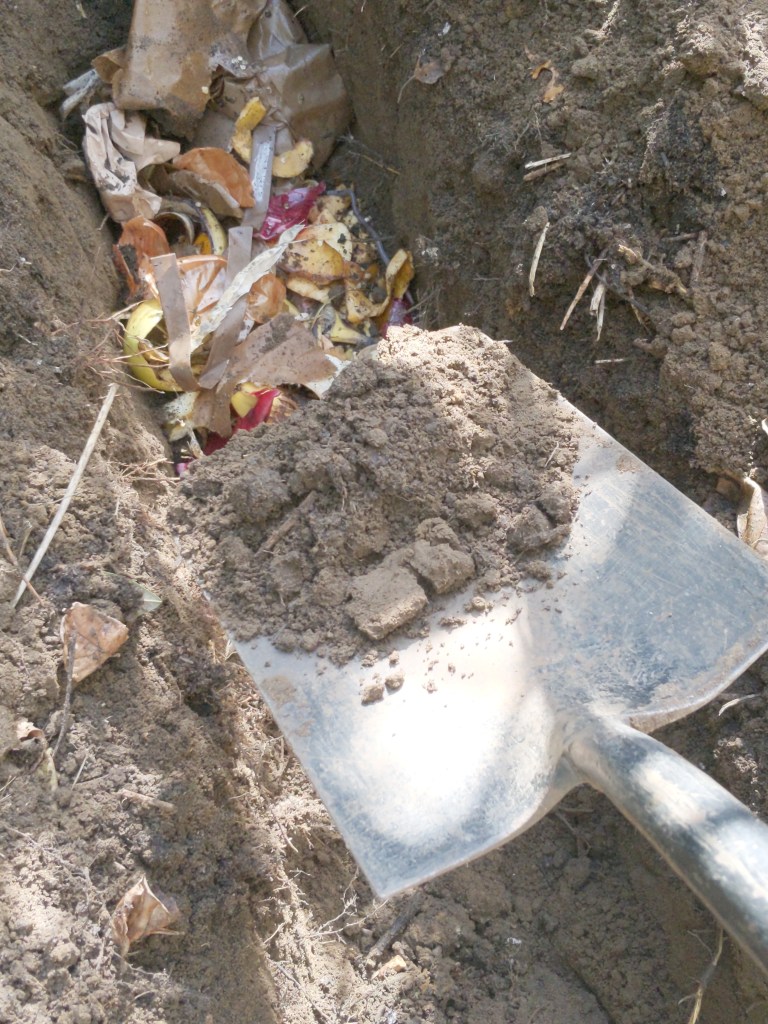
Each time you add material, cover it with around 10 cm of soil. Some gardeners recommend watering the trench. In Oxfordshire, I’ve never needed to do this as we seem to get enough rain over winter, but you may need to if you live in a warmer climate.
You’ll be surprised how quickly the bacteria and worms get to work – within a few weeks the organic matter will be unrecognisable. You will notice the area sinks over time and it is best not to plant into it until April or May.
In spring, erect your bean sticks over the trench and plant the beans into the enriched soil. Over the spring and summer their roots will feed on the organic matter and moisture that has been retained in the bed. I’ve grown my best beans using this method and am excited to be doing it again this year.

A huge benefit of trench composting is that the nutrients end up exactly where you need them without you having to shovel compost from your heap to the veg bed. This is a definite plus for me as I have a long garden and of course the compost system is right at one end.
The downside is that you are disturbing the soil structure in the first instance by digging – take a look at no-dig gardening instead if you want to avoid this whilst still improving your soil.
You are also leaving the ground bare over winter, which can encourage weed seedlings. An alternative option is to sow green manures in autumn and dig them into the soil in early spring, before planting out your beans or squash.
If are making a new raised bed, you could use this method without disturbing the soil by filling the bottom with kitchen waste and then covering it with soil or compost. This has the added bonus of you needing less compost, which can be expensive if you are buying it rather than making your own.
Ultimately, all of these methods are intended to improve the health of your soil. After all healthy soil means healthy plants, people and planet.
Want more tips? Check out our home composting guide
or sign up to our newsletter
 Replenish