Growing your own tomatoes from seed and later picking and eating them straight from the vine on a warm summers day is so satisfying.
Choosing your seed sowing mix
The first step is to choose your growing medium. I used peat-free multi-purpose potting compost, but this can be a little chunky and is sometimes too rich for seed starting. Specialist seed-starting compost is generally finer and lower in nutrients. Whichever mix you decide on, water it first to avoid disturbing the seeds after sowing.
Peat-free composts have improved dramatically in recent years. The Royal Horticultural Society aims to be entirely peat-free by 2026. For more tips to make the transition, take a look at their advice for gardeners.
Which variety to grow
There are thousands of tomato varieties to try, which is a huge benefit of growing your own – how many types do you see in the supermarket? They are available in all different shapes, sizes and colours – I particularly love yellow ones. Gardener’s Worls shares some of the best varieties to grow. The image below shows what I’m growing this year: Merrygold, Gardener’s Delight, Yellow Mimi, Toddler, Honeymoon and Alicante.
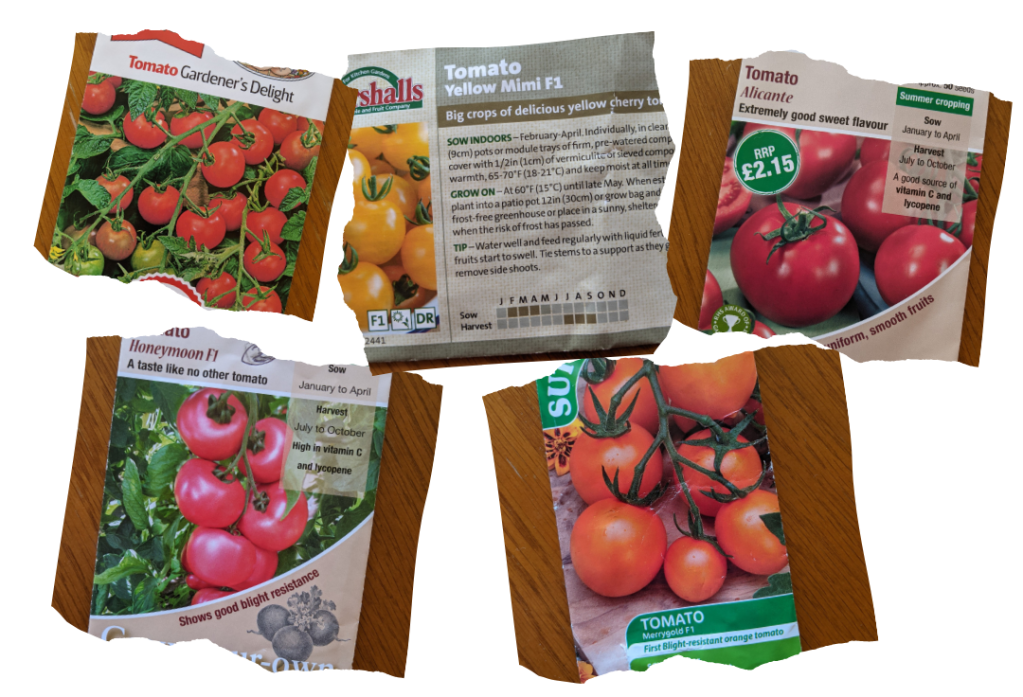
I don’t have a greenhouse, so grow all of my tomatoes outside in a raised bed. It is against a west facing wall, which does create a microclimate and help ripen the tomatoes. I always include some blight-resistant varieties and keep thinking about how I could attach a cover to the wall. Warm, wet weather leads to blight and by keeping the rain off the plants and only watering the roots, the risk should be reduced.
Four of the varieties I am growing this year are first filial generation or ‘F1’ seeds. These seeds are the result of controlled pollination between two specific parent plants with desirable characteristics – for example one parent might have yellow skin and one might have a particularly sweet flavour. They are often also bred for their vigour or disease resistance, producing higher yields from healthier plants.
However, the downside is that the seeds from ‘F1’ hybrid plants often don’t ‘come true’ and so don’t resemble or have the same features as the parent plants. They are also usually more expensive, with far fewer seeds in a packet. This RHS article explains more about the pros and cons of F1 versus open pollinated varieties.
Sowing your seeds
Tomato seeds can be sown indoors from early February to early April. Sow seeds thinly into small pots or modular seed trays of wet compost. Tomato seeds are fairly small and only need to be covered with a thin layer of compost or vermiculite. The rule of thumb for how deep to plant seeds is around 2-3 times their diameter. It is always worth checking the instructions though as some seeds do require light to germinate and so should not be covered.
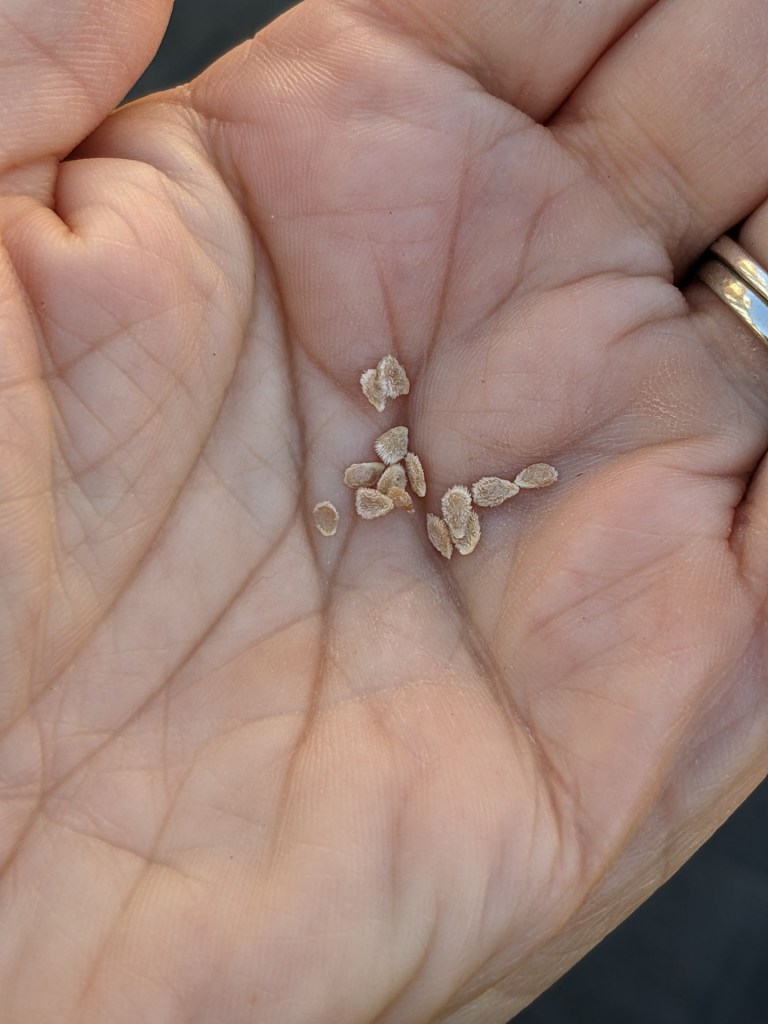
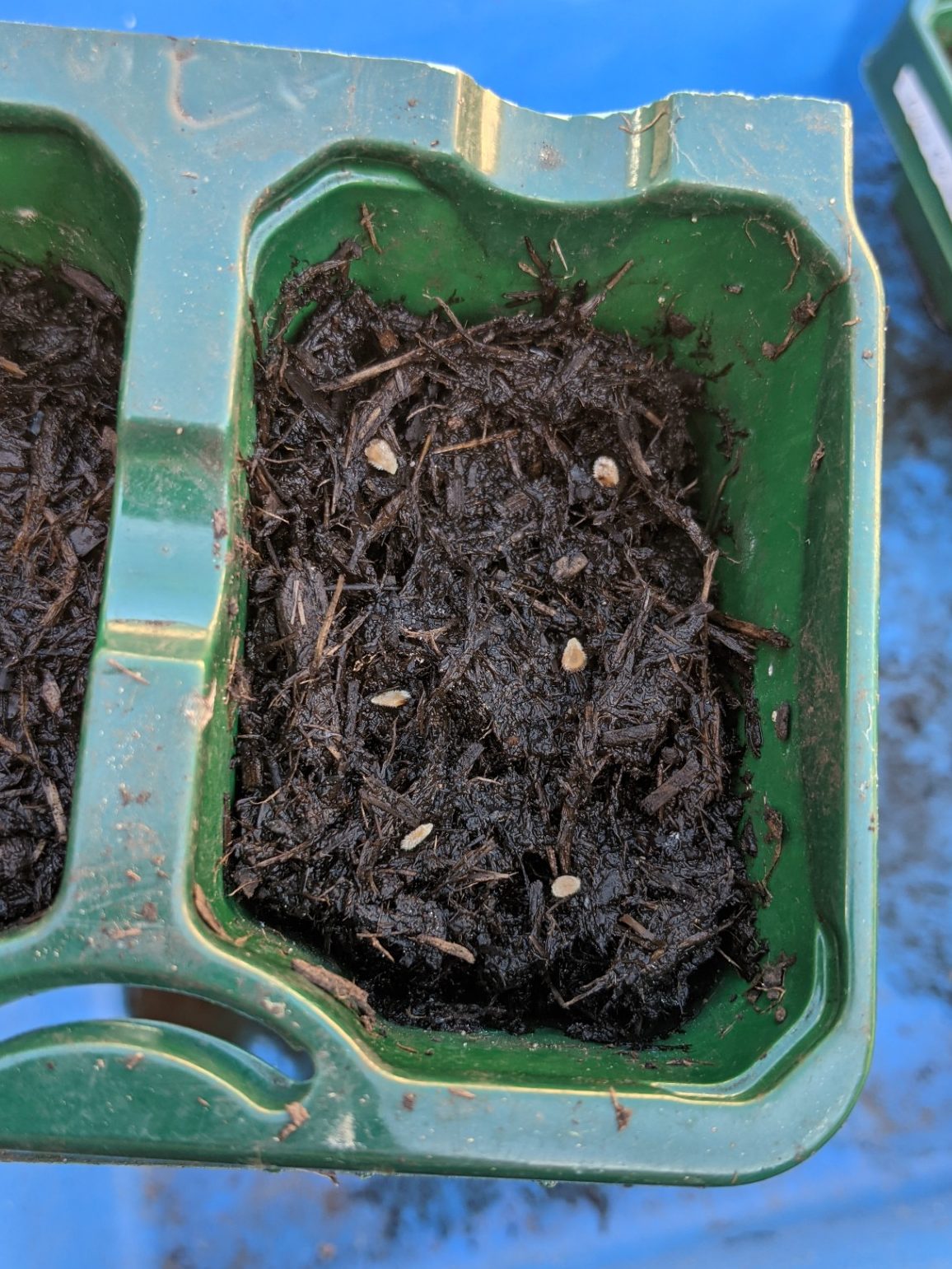
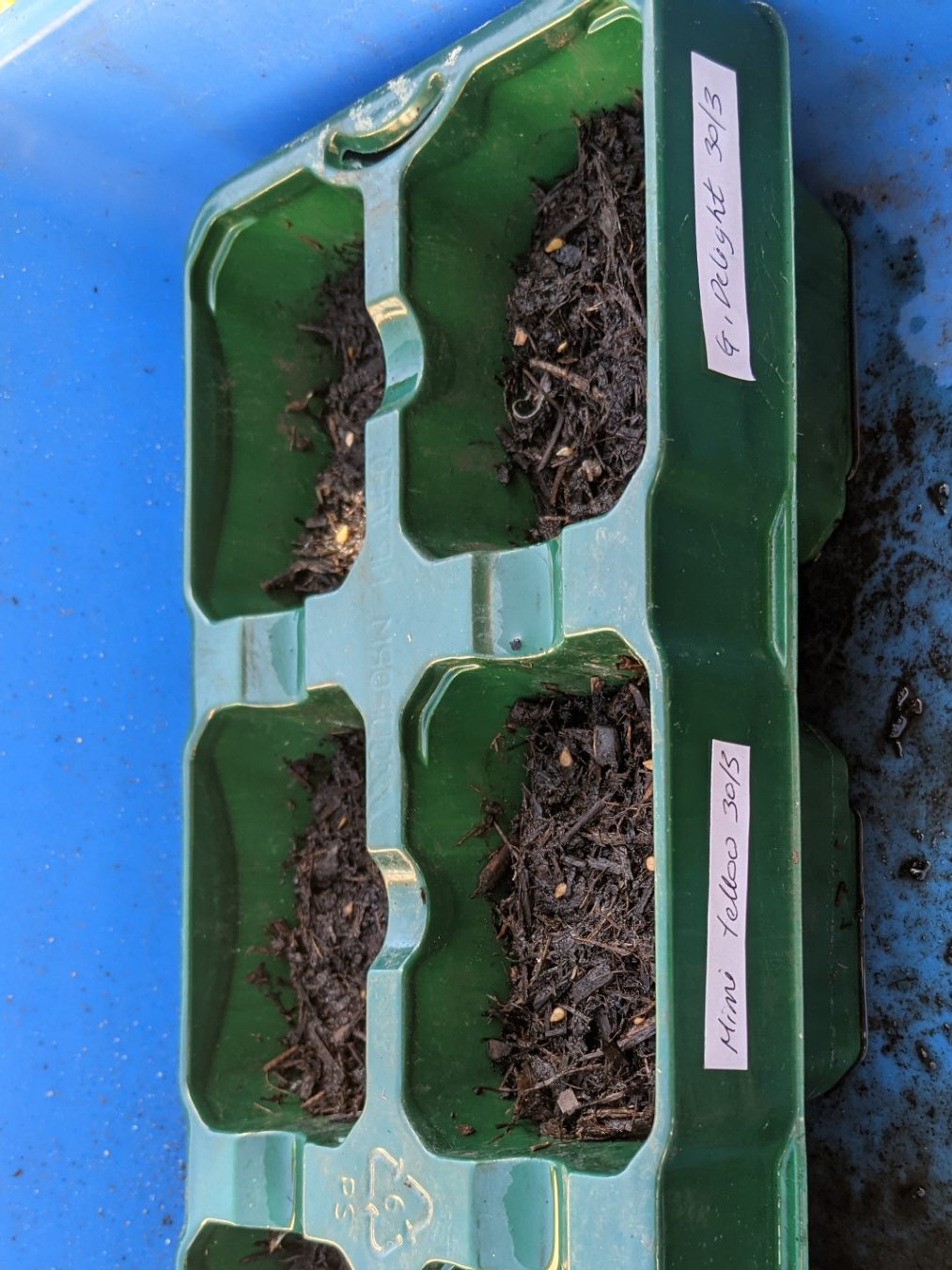
Place your seed trays on a sunny widowsill at a temperature of 15-24°C. Using a propagator or covering the containers with a plastic lid will stop them drying out and speed up germination. Your seeds will germinate in 7-14 days, at which time you can remove the cover.
Next steps
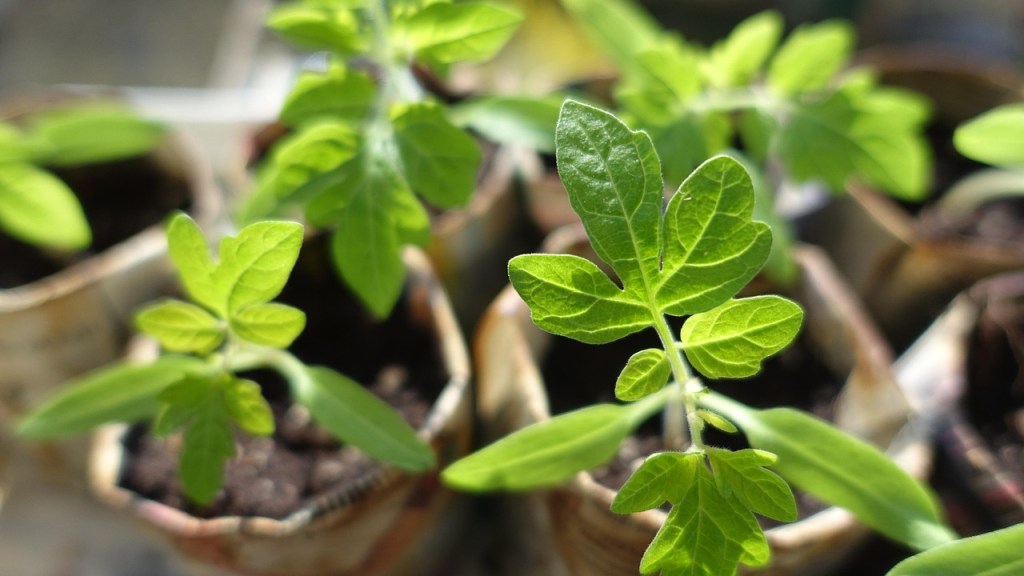
When they have their first true leaves (14-21 days after sowing), prick them out and pot them on individually. Planting them deeply will encourage more roots to form. Depending on how early you sowed them, you may need to pot them on again once or twice before planting them in their final greenhouse position or outside once all frost has passed.
Potential problems
Your seedlings might become ‘leggy’ with long, thin spindly stems. This happens when there is not enough light, particularly if the light is coming from one direction only. Rotating your seeds regularly will help prevent this and encourage your seedlings to grow straight. Each time you pot your seeds on, bury part of the stem under the compost and this will correct the ‘legginess’. You can even pinch off the lower leaves and more roots will grow from this point.
Another common problem with seedlings is ‘damping off’, which is a disease caused by fungal spores that will quickly result in the death of your seedlings. You can help prevent this by using clean pots and fresh compost for seed starting. Don’t overcrowd your seedlings and water them from below with tap not rain water. Sit the pots in a tray and add water to that – the roots will absorb the water, while the surface of the compost and the stem remain fairly dry. Avoid over watering your seedlings, keeping the compost moist not soaked.
Share your favouite tomato varities and top tips for growing them in the comments or on our social media.
For more tips on cooking and growing nutritious food with zero waste, sign up to our monthly newsletter.
 Replenish