Three Oxfordshire organisations making a difference
Post by Gracie Ball on behalf of Replenish
I’m a Business and Management student at Oxford Brookes University and recently visited some of the community partners involved in the Love Student Leftovers cooking competition.
I really enjoyed my time visiting these places and I’m so glad I got the opportunity to look round. It made me realise how much food would be wasted if these organisations didn’t exist. It also made me appreciate how lucky I am as an individual to always have food on my plate.
Cherwell Collective – Climatarian Kitchen

When I first arrived at Cherwell Collective, I was greeted by the staff in a very friendly manner. My attention was immediately drawn to the food marketplace, called Cherwell Larder. The marketplace was such a good way of stopping excess food from being thrown away and also build a sense of community.
The food from the marketplace is sourced from local businesses who have too much food (surplus) to sell before it expires. With the help of organisations like Oxford Food Hub, Cherwell Collective collects these items and keeps them from going to waste. All of the food is pay-what-you-can, so those in need can take it for free, and everyone can access fresh food and reduce waste. I hadn’t heard of a food marketplace before so it was really interesting and eye-opening to see one in action.
The cafe had effectively used ‘carbon costing’ by charging the carbon cost of a meal as the price. This means there are low cost options that are good for the environment. I was lucky enough to visit when the place was full of life which really added to the experience.
Oxford Food Hub
When meeting with Spencer from Oxford Food Hub, I was given a tour of their warehouse and really got a good insight into the quantity of food wasted. Seeing all that food being delivered, sorted and sent back out was incredible and I was amazed to find out that only 4% of their food isn’t redistributed, but the majority of this goes to an anaerobic digestion plant where it is predominantly turned into biogas (with a bit going to animal feed).
Food redistribution works by collecting surplus from supermarkets, wholesalers, distribution centres and farms, due to them being slightly damaged or close to their ‘use by’ dates. Oxford Food Hub then redistributes it to over 200 charities and organisations who give this food to those who need or can use it.
I didn’t know this was a thing until I visited Oxford Food Hub. I believe we need more awareness that this is happening and how we can get involved, as it is such an essential function, not only for reducing waste but also for helping those who need cheaper food sources.
Spencer showed me all their facilities and I got a real sense of how hard the staff and volunteers work and the weight of what they are doing for the planet.
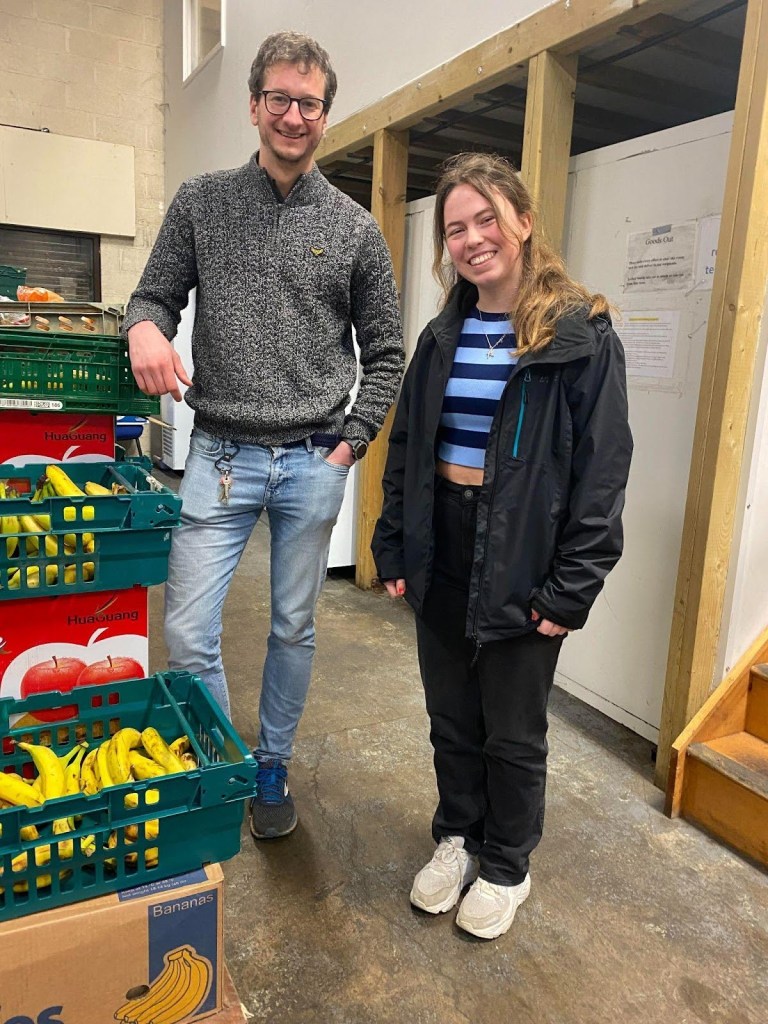
The use of electric vehicles helps emphasise the message of stopping the planet from further harm. My visit got me thinking about my own lifestyle and how I can improve and stop wasting as much!
Waste2Taste Community Cafe
Visiting Waste2Taste Community Cafe was a great experience! I met the lovely Sandra who showed me everything that they do at Waste2Taste. Sandra very kindly gave me a tour round the kitchen, and I got to see the staff in action. It was amazing to see what they could create with surplus food.

The menu they have is versatile and based on what food they get that week. Their prices are not expensive and the majority of dishes are vegetarian, which is beneficial for the planet as plant based food has a massively lower carbon footprint/carbon miles.
Sandra showed me the pantry where they store the food for the week. This food delivered by Oxford Food Hub, demonstrating how these organisations are working alongside each other to achieve the goal of eliminating food wastage.
Sandra pointed out their “freezer of love”. Waste2Taste pre-cooks meals and freezes them for anyone to take. All they have to do is pay-what-they-can at the current time, which could range from £0 to £10.
This idea helps those who may be struggling financially by giving them an affordable option of a hand cooked meal and also helps reduce waste by having these meals go to people instead of the bin.
There is also an “inspire kindness and pay it forward” message being reinforced by the post-it note board. This is where others can pre-pay for an item and then anyone who needs it can take that sticky note and get the item.
They also have a “mini larder” which is filled with food that won’t be used in the kitchen. This food is free for anyone to take who may need it, and included items from baked beans to pasta. This is amazing to do as it really removes the stigma of not being able to afford food.
All funds raised are reinvested back into the community projects to make food more accessible for everyone.
For more tips on cooking and growing nutritious food with zero waste, sign up to our monthly newsletter.
 Replenish