Post by Hannah Bironzo on behalf of Replenish
This nettle focaccia recipe swaps instant yeast for sourdough starter which makes for a slower process as we need to slowly ferment the starter and dough. I promise the results are worth it though!
I love the month of June – it’s green, green everywhere! This week I noticed the huge, verdant patches of stinging nettles, standing tall and luscious with their dark green leaves. On a walk on Boars Hill, I picked a few and came up with the idea of baking a nettle focaccia. You might be thinking, but won’t they sting my mouth?! Fear not, when juiced, pulverised, or baked, the stinging effect vanishes.
It is important to only eat the young nettle leaves – before the nettle plant has flowered. Young leaves are tender (they become rather tough after flowering). Furthermore, it is the young nettle leaves which are safe to eat. Once the nettles mature and flower, they produce crystals which can affect kidney function. Please only eat young leaves.
Finally, it is safe to pick the nettle seeds (which start to appear in mid June) and eat those. Fresh or dried, these seeds are packed with nutrients and beneficial compounds. The seeds are the most nutritious part of the nettle plant, containing vitamin A, vitamin C, iron, silicon, calcium and magnesium. Adding a sprinkle of seeds to your favourite food is an excellent way to bring that nutrition into your diet. I sometimes add dried nettle seeds to salt and use that in my cooking.


For those brave raw food enthusiasts, who might like to try a nettle, out in the wild, I have some advice for how to avoid the sting! My Oxford-based Medical Herbalist friend, Katie Reid, suggests folding the young leaf down the central rib on each side with the underside enclosed, rolling it up, squeezing gently and munching it like that, to avoid the sting. Katie also educated me on the health benefits of nettles. I learned that they are packed with omega-3 fatty acids, alongside a range of minerals and so they make a naturally nutritious addition to our diet.
For anyone (like me) who is still feeling a little cautious of the stinging effect, I have a delicious nettle focaccia recipe to share in which, I promise, the sting cooks out and instead leaves you (pun intended!) with a fresh, hearty and slightly zingy flavour. It’s delicious and I hope you try it!
Preparation time: 30 minutes, plus proving time and overnight resting time
Cooking time: 30 minutes Servings: 8
Ingredients

- 225g bubbly, active sourdough starter
- 750g water
- 900g strong white flour
- 3 tsp salt
- 4-5 stems of nettles
- Generous drizzle of extra virgin olive oil
Method
- Mix the starter, flour and water in a bowl and leave the mixture for 30 mins to rest. This process is known as ‘autolyse’ by sourdough bakers and it creates an extra silky dough with a nicely developed flavour.
- Add the salt and ‘stretch and fold’ the dough every so often, for the next couple of hours.
- Pop the dough in an oiled bowl, cover with a tea towel and place it the fridge overnight.
- Meanwhile, take your nettles (careful not to get stung!) and blanche them in boiling water for 90 seconds.
- Leave them to dry on a tea towel, perhaps overnight.
- Once dry, remove the leaves from the stems and cut them into small pieces.

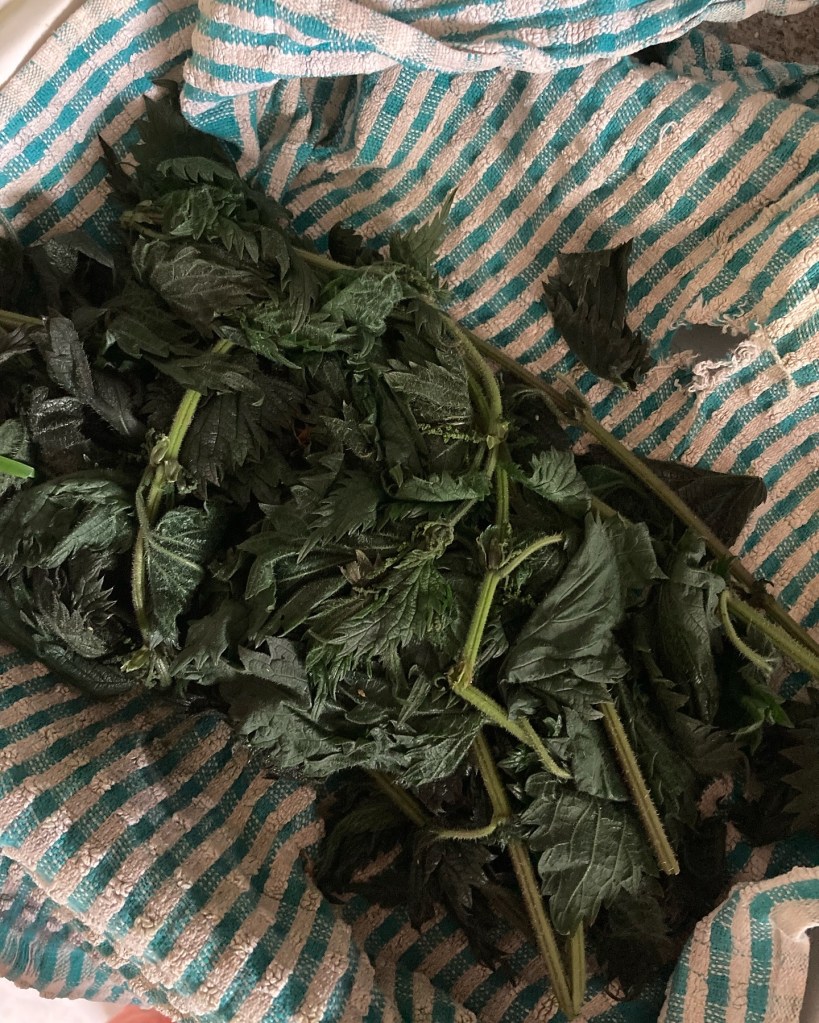
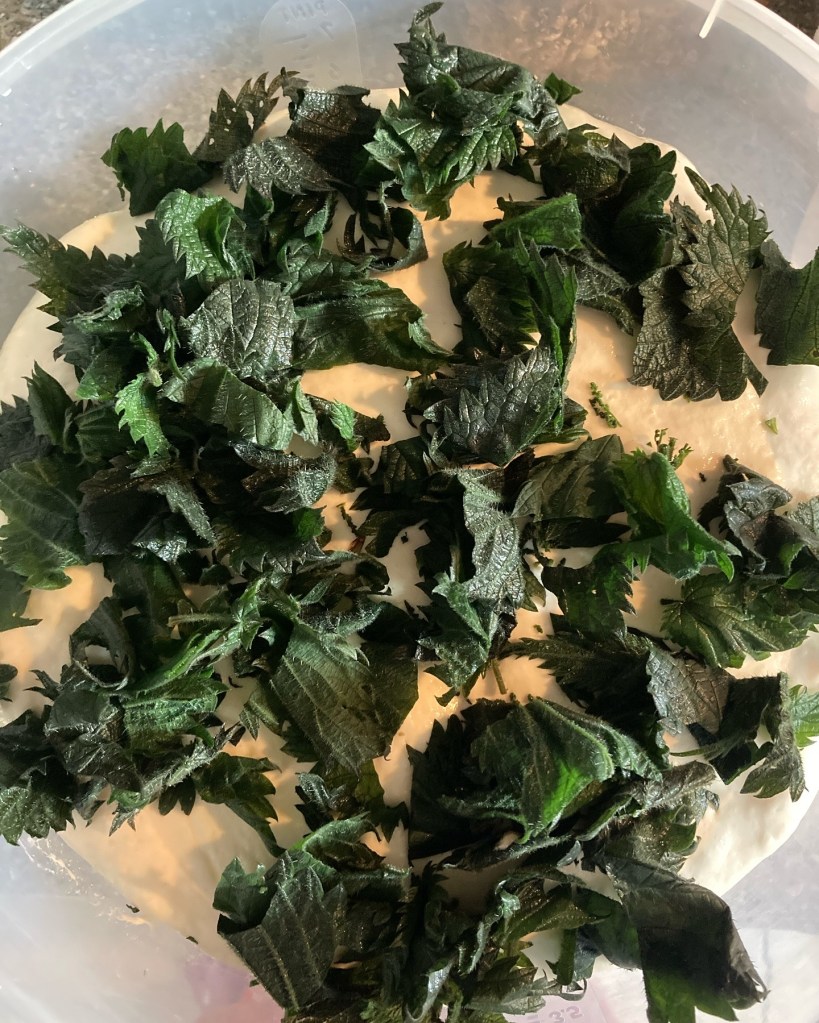
- The next morning, remove the dough from the fridge and add the nettle pieces to your dough. Knead the dough to incorporate the leaves into the mixture.
- Transfer your dough onto a baking tray and stretch it out to fit inside the tray. Leave it at room temperature for 2 hours (and watch the bubbles emerge).
- Dip your fingers in water and prod the dough all over. Drizzle the dough with oil and a sprinkling of sea salt, if desired.
- Bake your nettle focaccia in a steamy oven at 220°C for 10 mins then reduce to 180°C for around 20 minutes until nicely baked and golden.

Enjoy the aroma in your kitchen. If I could bottle that scent, I would!
For more tips on cooking and growing nutritious food with zero waste, sign up to our monthly newsletter.
 Replenish