Post by Andrew Myatt from Oxford Farmhouse on behalf of Replenish
90% of apples from English gardens go to waste? That’s terrible! Let’s do something about it. My friend showed me the Moss Cider Project, from Moss Side in Manchester. They had found there were enough apples going to waste in the centre of Manchester to be able to make a cider making business. We thought that if they could do that in Manchester, we should be able to do it here too!
So we tried making cider. The first year, the cider was pretty rough, but I was determined to drink it!

The second year I thought we would try making apple juice. Everything on the Internet said making apple juice was much harder, but our results were incredible – we hit the right proportions the first year. After three years of playing with cider and apple juice making, I thought God was telling me to start a business. But we needed to upscale tenfold, and had no capital. Eventually, we took the plunge, cleaned out the garage, called Environmental Health to come and inspect it, and much to my surprise got five stars.
I knew the kind of press I wanted to build, and eventually found some good instructions online. To my surprise they were by Jamie Oliver. Since then we have upscaled to an old press that was still the traditional rack and cloth method (pictured), and have now just bought a belt press which gives us much greater capacity.

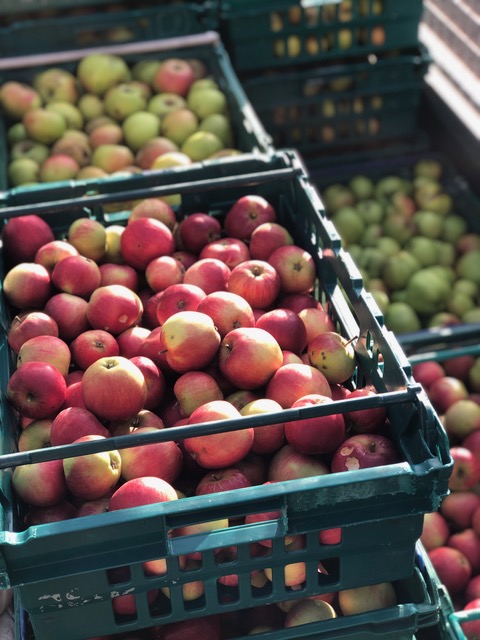
From day one, we wanted a business that made a difference. In our case, apart from being good employers, we wanted to use fruit that would otherwise go to waste, and to be a place where people could come and receive help. This autumn we are expecting to receive 20 tons of apples and pears from the Oxford area, which we will turn into apple juices, craft cider, cider vinegar and mulled cider. Most of this will be returned to those who bring their fruit, for a small charge, with the apples juiced, pasteurised, and with their own label. The rest will be sold through local shops or direct sales.
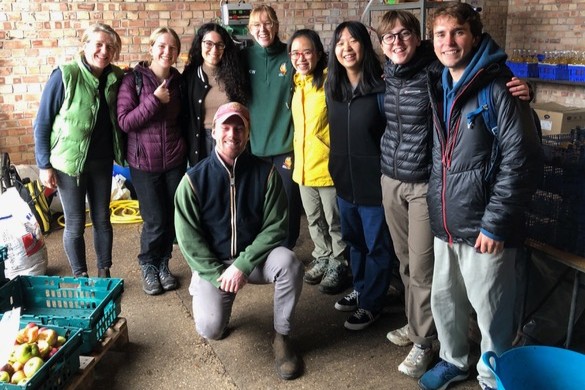
Each year people have come who have needed space, rehab, or just a place to hang out with friends. We’ve worked with various groups, including some from Farmability (adults with autism and learning difficulties), and men from Edge Housing (ex homeless) as this forms part of their rehab. The Oxford University Nature Conservation Society have also just signed up again for this term for apple pressing and orchard maintenance.
Local schools are also invited to visit us so that the children can learn about food processes and where their food comes from. We have developed some Key Stage 2 material that goes with a visit to see the apple pressing. At the last school visit, only 2 of the 30 children had been on a farm before – they loved the whole experience and could talk of nothing else for the next week. A highlight is always feeding the waste apple pulp to sheep.
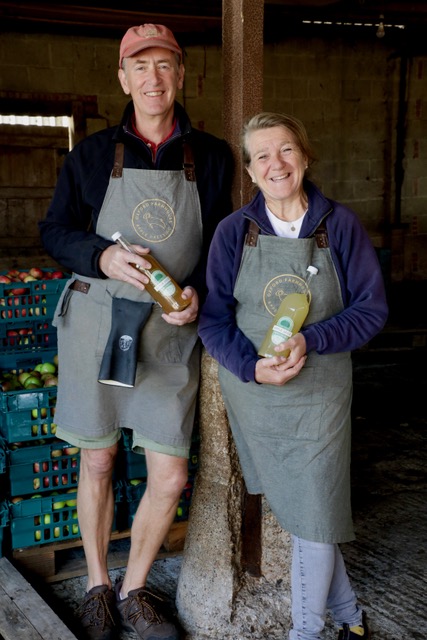
Sustainability is increasingly important in our society. The University of Reading is the leading university in that regard, and they contacted us in October ‘24 to ask if we would supply them with apple juice, because they were no longer importing drinks or food, including orange juice. This has been a fantastic development for us, and although we don’t have enough waste fruit from the Oxford area, we’ve been able to buy fruit from Kent that has been rejected by the supermarket because of its size or shape. We hope this also creates more space for our local volunteers to be able to come. A number of Oxford University colleges are also starting to use our products – local produce, sold locally.
Making apple juice or craft cider can be a labour intensive activity. Get in touch if we can help turn your excess into an award wining juice.
Text and images © 2025 by Oxford Farmhouse
For more tips on avoiding food waste or growing your own food follow us on social media or sign up to our newsletter
 Replenish