We sort fact from fiction by busting six common food waste myths.
1. Most food is wasted by supermarkets
This is absolutely not the case. In fact, of all the post-farm gate contributors to food waste, retail accounts for the smallest amount (~2%), whilst households make up around 60-70%¹ and are the single largest contributor. This is over 6 million tonnes of food waste per year or 88 kg per person per year² – that’s more than the average person’s body weight in food waste.
The environmental impact of this amount of food waste is devastating, producing harmful greenhouse gas emissions, equivalent to roughly 16 million tonnes of carbon dioxide over the food’s journey from production to disposal². Numerous other resources are also wasted including water, land, packaging materials and labour.
WRAP estimated the cost of edible food waste in their 2022 report to be £17 billion or a staggering £1000 per year for an average household of four². Who wouldn’t rather spend that on a family holiday? When you throw food away, you are literally throwing money away.
The good news is that given we are the cause of the majority of food waste, we can also be a significant part of the solution. Imagine the difference we could make if we all reduced our food waste by just 10 percent. Start by monitoring your food waste for a week to see what you are throwing away – the other myths we’re busting below might also help.
2. You can’t eat sprouting potatoes
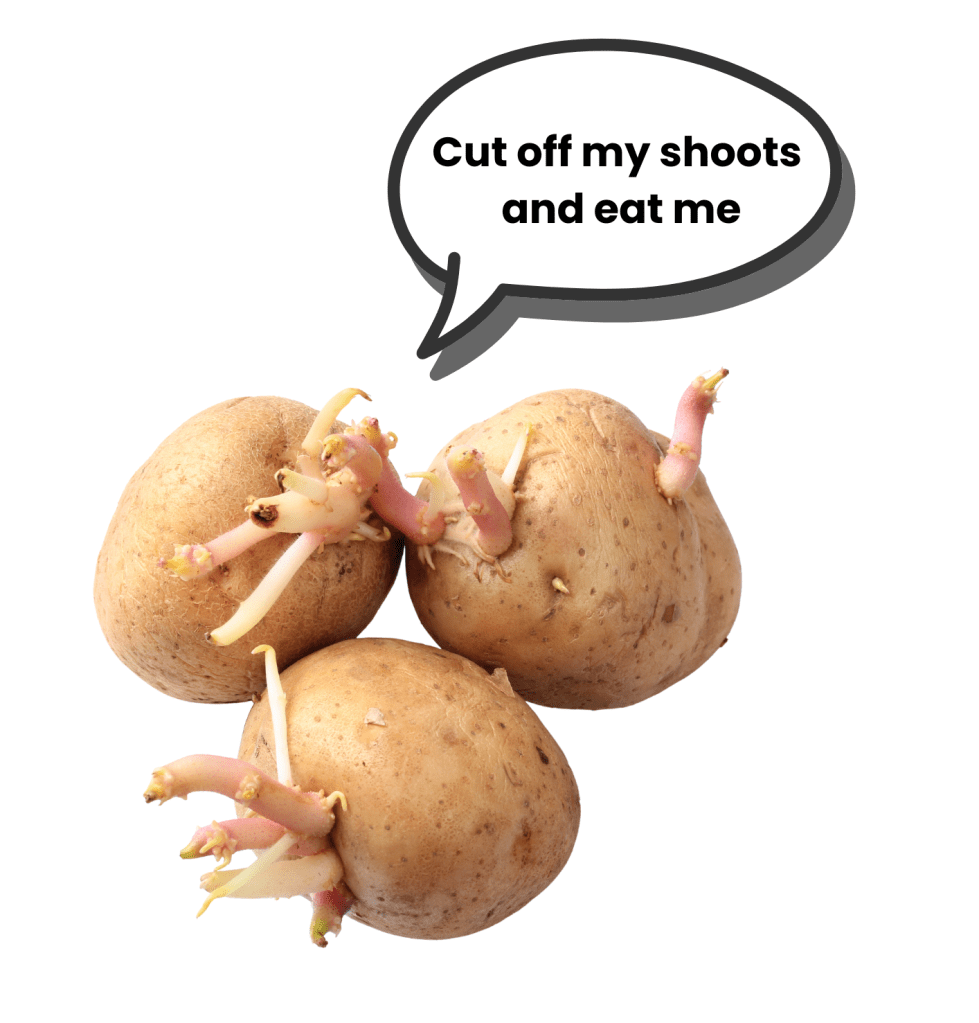
Potatoes are one of the most wasted foods in UK households³, with an estimated 510,000 potatoes binned each year – that’s 46% of all potatoes purchased! Many people buy large bags of potatoes and throw them away when they start to sprout.
I’m pleased to say that you can still eat potatoes that have sprouted⁴. Cut off the sprouts, eyes and surrounding skin (especially any green parts as these are toxic) and ensure the potato still feels firm; then cook as usual.
3. You can’t refreeze frozen food
Whilst this is true of raw food, which should be used within 24 hours once fully defrosted, you can cook and then refreeze food⁵. For example, if you defrost some raw chicken breasts and then make chicken curry with them, you can freeze the leftover curry – just make sure it is cool first. You will then only be able to reheat the curry once⁵, so it’s wise to freeze it in individual portions. Freeze food in airtight containers or freezer bags and don’t forget to label it with what it is and the date.
4. Expired food must be thrown away
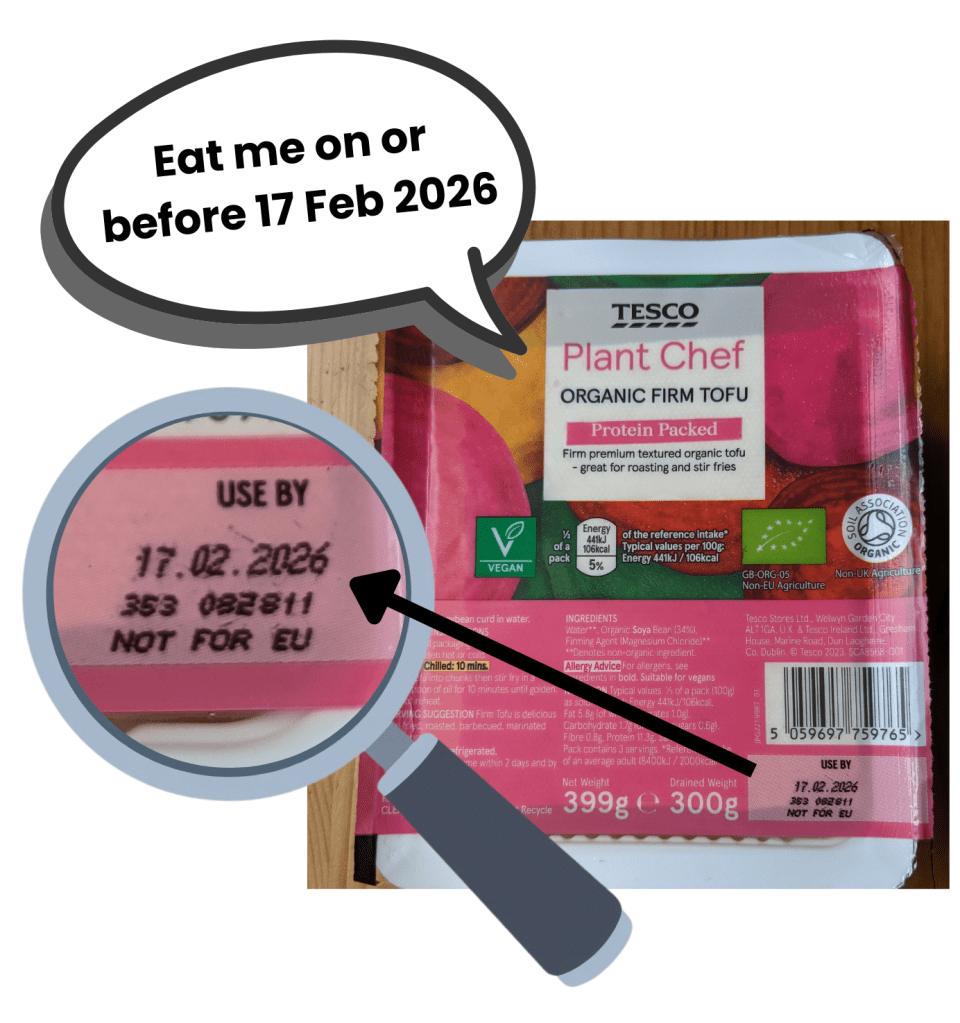
The 2022 WRAP survey² revealed that nearly 40% of the edible food wasted in households was thrown away because it wasn’t used in time – either the product smelt or looked off or it was past the date label. So, does food need to be thrown away as soon as the date on the label has passed? It depends which date you are looking at.
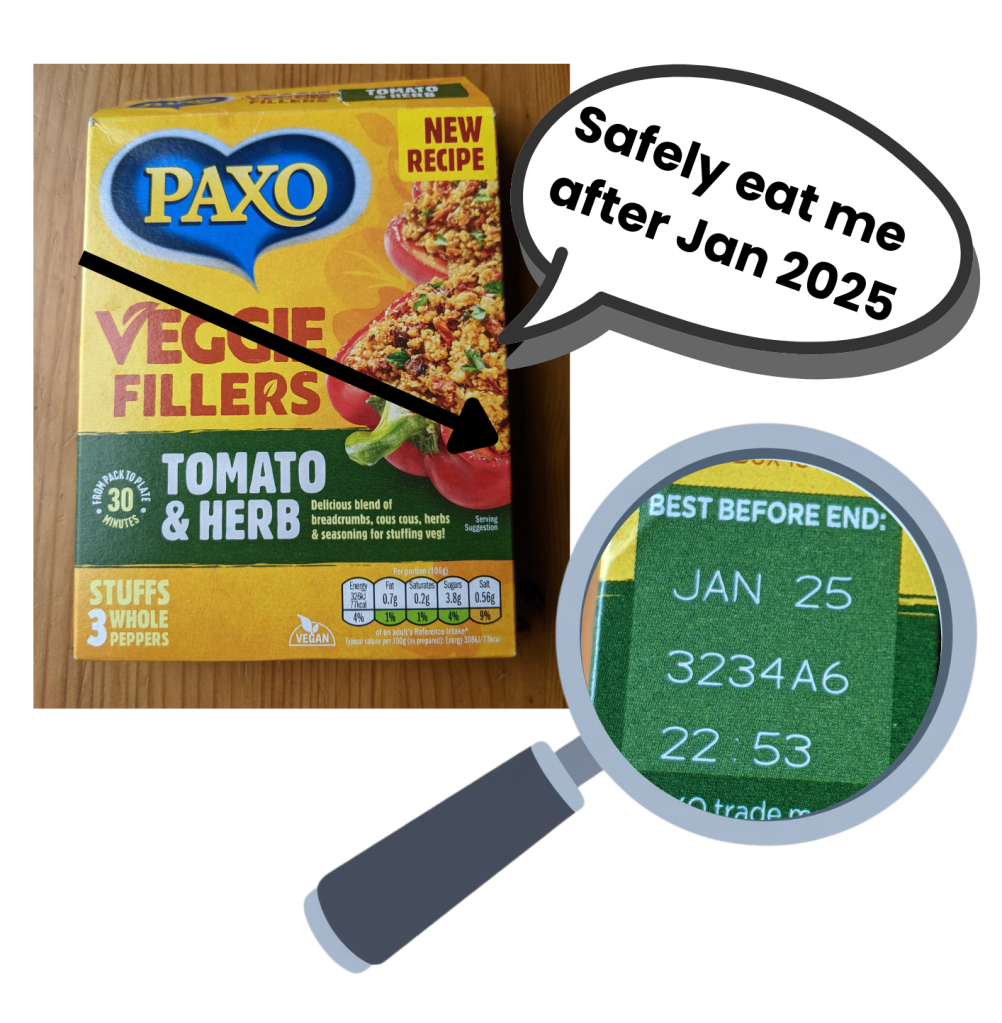
Use by: Safety-critical; fresh food should not be eaten after this date, but foods can be safely frozen up until midnight on the use-by date and then eaten later.
Best before (the label may say BB or BBE): Quality-indicator; food can be safely consumed beyond this date, although the taste or texture might change slightly.
Sell by: Stock-control related only; these dates are being used less often to avoid confusion and reduce waste.
Therefore, only ‘use by’ dates should be considered expiry dates. Best before dates are used on dry or store cupboard foods, like pasta, rice, biscuits, cakes, and sealed containers like tins and jars. However, in an effort to reduce waste, they are increasingly being used for dairy products like milk and yogurt. Use your senses (smell, sight and taste) to check these are good to eat.
5. You can’t eat broccoli or cauliflower stalks
Nonsense! As well as broccoli and cauliflower stalks, we tend to throw away lots of edible and tasty parts of fruits and vegetables. To avoid food waste, we need to start compl-eating and utilise all edible parts of plants from root to shoot.
Carrot tops, beetroot, celery and cauliflower leaves, chard stems, the greener parts of spring onions and leeks, cucumber ends, potato peels and mushroom stalks are all perfectly edible and often highly nutritious.
If you or your family really won’t eat any of the above, pop them in a bag in the freezer and when you have a good amount, add them to a homemade soup – whiz it up and you (or the kids) won’t even notice all those extra veg are in there. Even banana peels are a great addition to a curry like this one from Nadiya Hussain or can be used to make banana peel bacon.
6. All fruits and vegetables should be stored in the fridge
The advice for many fruits and vegetables is to store them in your fridge, which should be set between 0-5°C*. According to WRAP, the average fridge temperature in the UK is 2°C too warm* – use their handy ‘chill the fridge out’ tool to find out how to check and adjust your fridge temperature to maximise the life of your food.
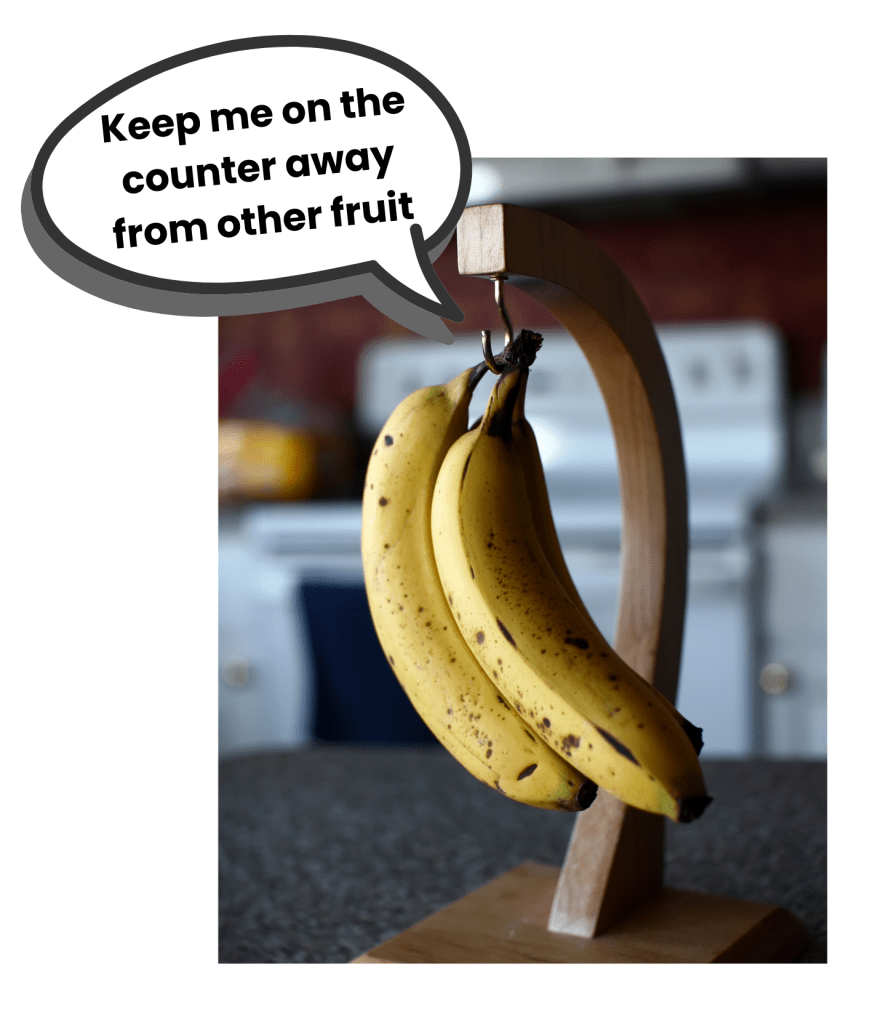
Apples, oranges, berries and citrus fruits will all keep longer in the fridge. However, bananas are better kept at room temperature as they generally need to ripen further after purchase. Store them on their own though as they produce ethylene, which will cause other fruits to ripen faster. Once they reach your desired ripeness you can move them to the fridge to slow down ripening, although the skin will turn black, which puts some people off eating them.
I prefer to eat fruit, especially strawberries, at room temperature and so I’ll keep small amounts on the counter and store the surplus in the fridge. If you don’t mind cold fruit, put the whole fruit bowl in the fridge at eye level for easy access.
Keeping most vegetables, including potatoes (advice recently updated⁶), in the fridge will extend their shelf life. Onions are the exception and should be stored on their own in a cool, dry, dark place. Read our blog for more ‘food storage hacks‘.
Sources
- Waste and Resources Action Programme (WRAP): Breakdown of UK food waste
- WRAP: Household Food and Drink Waste UK 2022
- WRAP: Household Food Management Survey 2024
- Food Standards Agency social media post
- Food Standards Agency consumer advice
- Love Food Hate Waste Blog and Food Standards Agency consumer advice
- Love Food Hate Waste check your fridge temperature
For more tips on avoiding food waste or growing your own food follow us on social media or sign up to our newsletter
 Replenish