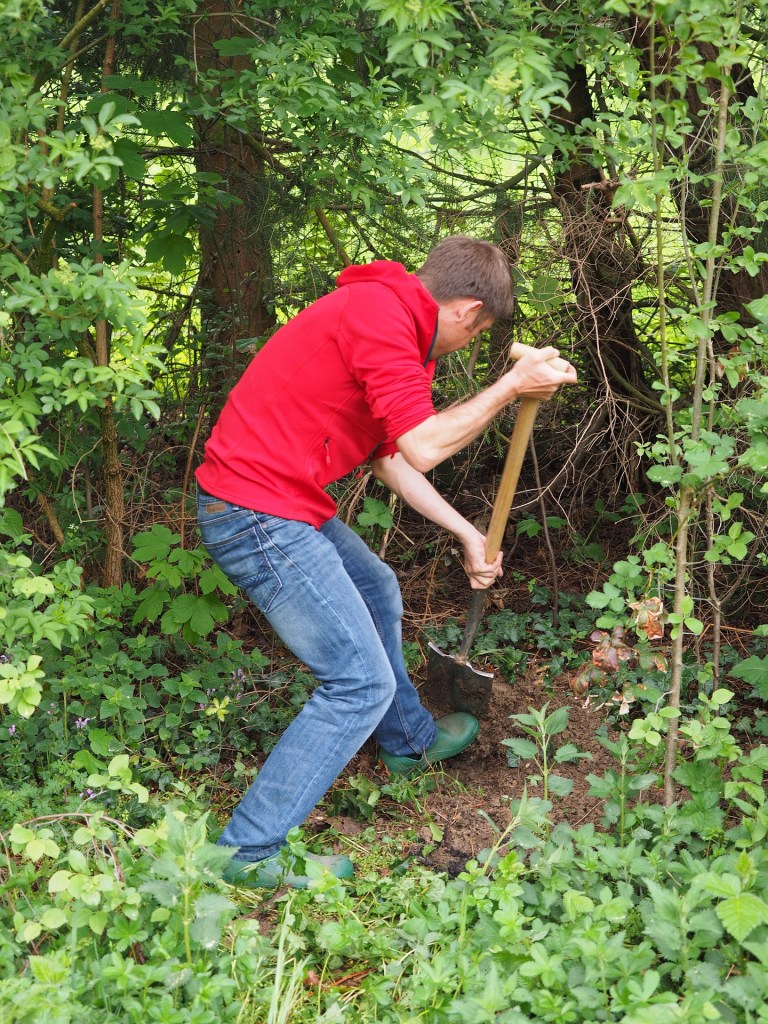
Gardeners have long been told that digging soil over winter will improve its quality. However, soil is teaming with life, including microorganisms, fungi, worms and much more. Digging soil disturbs life and damages soil structure, which in turn leads to soil erosion.
What’s more, the underground ecosystem is highly complex, and we are only just beginning to understand it. As we are learning the hard way from the climate crisis, it’s generally best not to meddle too much with natural systems if we don’t understand how they work. By leaving the soil alone, we can support the soil life which underpins plant health – and save time! More info here.
Creating ‘No Dig’ Garden Beds Using Compost:
1. Clear plant residues and weeds – if very weedy, lay cardboard.
2. Mulch (cover) the bed surface with 3-5cm of organic matter. Decomposed organic matter (compost) will harbour fewer slugs than undecomposed organic matter (like woodchip or leaves).
3. Cover paths with cardboard (to kill weeds) and top with 3-4cm of compost or wood chips (ideally partly decomposed already).
Sourcing mulch/ compost
You can use compost from a variety of materials, including food and green waste, woody materials (like wood chip), animal manure and autumn leaves. See here for our how-to guide.
If you can’t make enough, it’s worth buying extra in for the extra fertility it will bring to your soil. It’s best to use old compost, as opposed to fresh, steaming compost.
How to clear weeds using compost and cardboard:
How to make a no dig raised bed with compost:
Useful resources on no dig
If you want to find out more about the no dig method, check out this interview with Charles Dowding, an expert on organic growing and ‘no dig’. You can also listen to Dowding discuss no dig, composting and organic methods on the Garden Organic podcast series.
If you want to give it a go, have a look at this beginner’s guide to no dig. Dowding has also written a practical and accessible book on the topic, No Dig Organic Home and Garden’
Oxford Food Hub’s food waste rescue guide
Post by Freya Wattam from Oxford Food Hub on behalf of Replenish At Oxford Food Hub, we are experts on food waste. Every day, we collect good-quality, surplus food from producers, wholesalers, and retailers, and deliver it (completely free of charge) to 245 charities and community groups across the county. Our mission is simple: to…

Six food waste myths busted!
We sort fact from fiction by busting six common food waste myths. 1. Most food is wasted by supermarkets This is absolutely not the case. In fact, of all the post-farm gate contributors to food waste, retail accounts for the smallest amount (~2%), whilst households make up around 60-70%¹ and are the single largest contributor.…
Growing together: our community garden story
Post by Sarah Brown from Dunmore Farm Estate Community Garden on behalf of Replenish I’m back with part two of our community garden journey, but do have a read of part one if you haven’t already ‘The making of a community: from idea to action’ Part two focuses on the people and positivity that have…
 Replenish